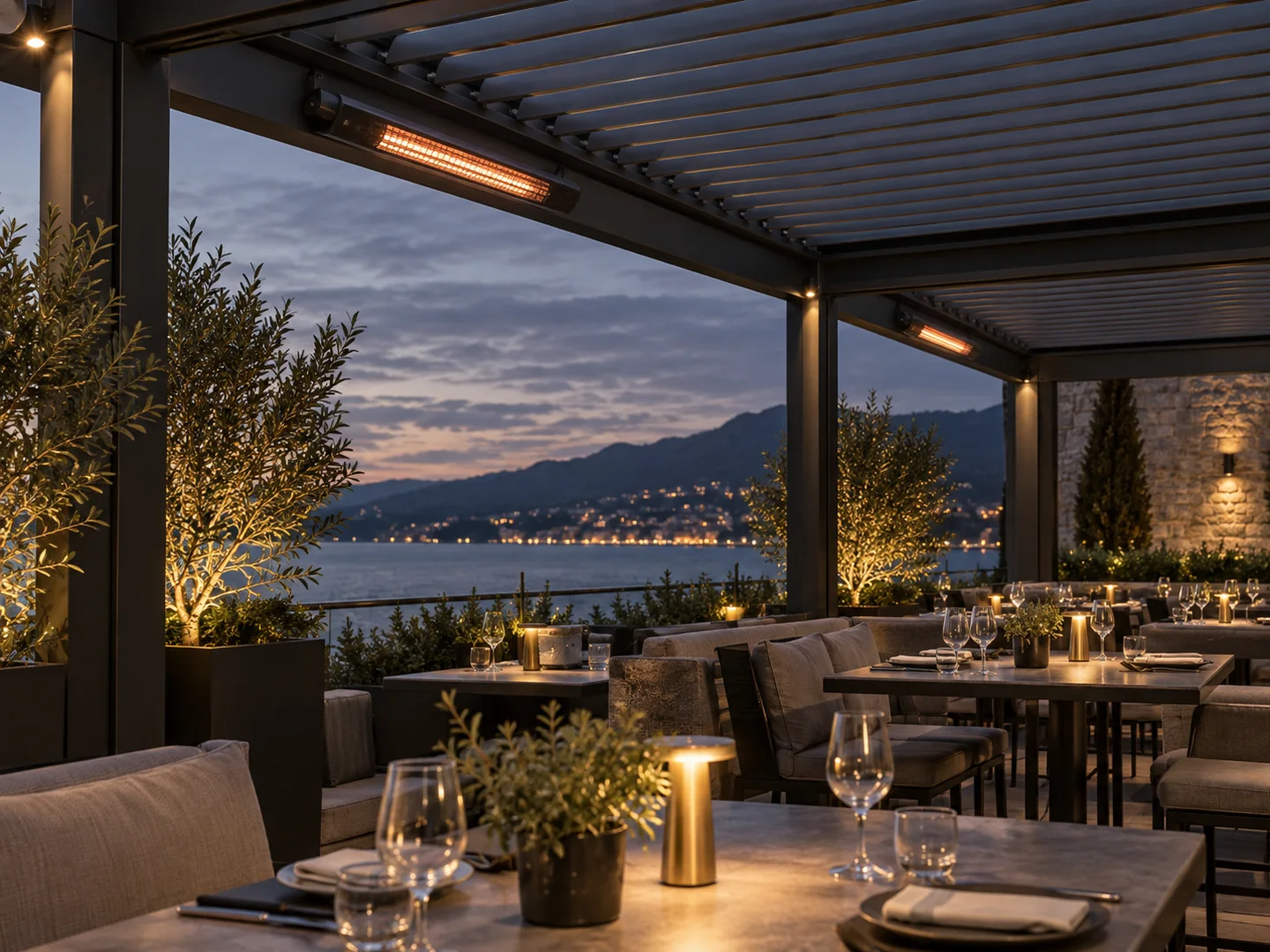
What this heater does
A slim electric radiant unit is mounted to a suitable beam or wall and aimed at the seating area. Comfort depends on distance, angle, exposure and ambient conditions. Heating output and coverage are taken from the selected unit's project documentation.
Best applications
Infrared heating is most relevant for defined occupied zones where the selected unit can be mounted and powered safely.
- Restaurant terraces used in cool evenings
- Hotel and resort lounge zones
- Residential dining areas with controlled exposure
- Projects with adequate electrical capacity
Radiant zone planning
Heaters warm people and surfaces within their radiant path rather than all surrounding air. Seating position, mounting height, aiming angle and exposure influence comfort; a universal coverage area should not be assumed.
Mounting and clearances
Select the heater before fabrication so its weight, bracket, angle and required clearances can be documented. Keep heat away from fabrics, cables, moving roof parts and other materials identified by the heater instructions.
Power and control
Confirm output, voltage, circuit capacity, isolation and zoning from the selected heater data. Commercial venues should decide which heaters operate together and who controls them.
Pergola integration
The responsible project team must verify heater weight, mounting brackets, combustible clearances, louver movement, cable route, weather rating, voltage and local approvals. Model compatibility is project-specific.
ZIP screens or glass may alter ventilation and heat conditions, so enclosure and heater operation should be reviewed together.
Available options
Mounting and control options are recorded only after a heater is selected for the project.
- Beam- or suitable wall-mounted planning
- Individual or zoned control
- Project-selected output and voltage
- Finish and location coordinated with the pergola
Installation requirements
Select the actual heater before fabrication, then document its load, bracket and clearance zone. Coordinate a protected cable route and isolator, avoid conflicts with screens or glass and use a qualified electrician.
Accessory-specific quote preparation
Information for a pergola heater quotation
Heating layout starts with the occupied area, enclosure condition and the selected equipment's mounting requirements.
- Pergola model
- Area to heat
- Mounting location
- Mounting height
- Available voltage
- Number of zones
- Whether ZIP screens or glass are present
Common questions
Are infrared heaters suitable for pergolas?+
They can be suitable when the chosen unit's outdoor rating, mounting, clearances and electrical requirements are met.
How many heaters are needed?+
The answer depends on the selected heater data, area, exposure and comfort target; LUCY will not estimate this without verified inputs.
Can heaters be used with ZIP screens or glass?+
They may be coordinated, but heat clearances, ventilation, wiring and operating procedures must be reviewed together.
Does LUCY supply a fixed heater model?+
The exact supplier, output and electrical specification remain a project selection unless confirmed in the quotation.
Heating planning
Plan infrared heating zones.
Send the occupied area, mounting height, voltage and enclosure condition so equipment and clearances can be reviewed.
Plan pergola heating