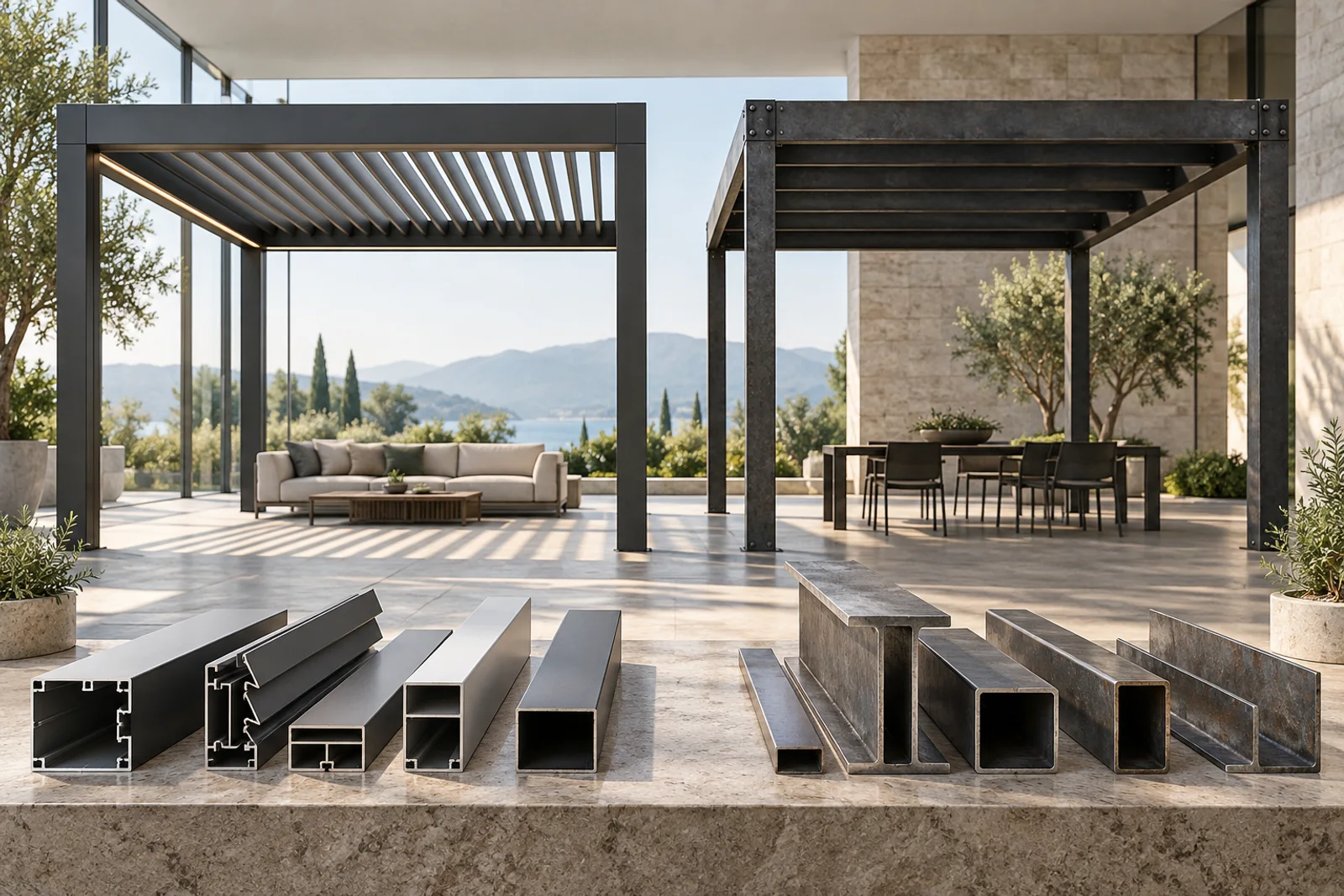
- Compare the designed frame and connections, not generic material strength claims.
- Treat corrosion protection as a complete system covering profiles, cuts, fasteners and interfaces.
- Include transport, lifting, site welding or bolting and finish repair in the decision.
- Match the material route to the roof system, accessory interfaces and local engineering requirements.
- Request project-specific drawings and verified technical data before approval.
Best for
- Buyers comparing metal pergola proposals
- Architects selecting a visible frame language
- Contractors coordinating lifting and installation
- Dealers explaining material and maintenance differences
Key information
Key specifications
- Decision basis
- Structure, exposure, finish, transport, installation and maintenance
- Aluminum route
- Extruded profiles can combine structure, drainage and accessory interfaces
- Steel route
- Section and connection design can suit specific structural or architectural requirements
- Approval
- Project drawings, connection details and local engineering review
Available options
- Powder-coated aluminum louvered system
- Project-designed steel frame
- Hybrid assemblies only when interfaces are engineered
- Compatible screens, glass, lighting and controls
Quick comparison
| Decision factor | Aluminum pergola | Steel pergola |
|---|---|---|
| System form | Often uses purpose-designed extrusions | Often uses formed or structural sections |
| Weight and handling | Generally lighter for comparable components | May require heavier handling depending on design |
| Corrosion strategy | Alloy, pretreatment, coating and compatible fasteners | Steel grade, preparation, coating or galvanizing and repair |
| Site work | Commonly prefabricated and mechanically assembled | May involve bolting, welding or heavier lifting |
| Best answer | Depends on the complete approved system | Depends on the complete approved system |
Start with the pergola system, not a material slogan
Material strength values do not select a pergola by themselves. Span, post grid, roof movement, wind and snow criteria, building connection, drainage, accessories and local approval determine how the frame must work. A well-designed aluminum system can be more suitable than a poorly defined steel frame, and the reverse can also be true for a different project.
Ask each supplier for a dimensioned plan, elevations, section strategy, connection concept and stated design inputs. Compare the actual assembly being offered rather than assuming every aluminum or steel pergola behaves the same.
- Project location and exposure
- Clear spans and preferred post positions
- Freestanding or building-connected layout
- Rotating, retractable or fixed roof
- Screens, glass, lighting and other interfaces
Compare structure, weight and installation together
Aluminum extrusion allows internal chambers, screw ports, gutters and accessory tracks to be coordinated in one profile family. Steel sections may provide a different stiffness, connection or visual route. The result still depends on section geometry, temper or grade, wall thickness, reinforcement and connection design.
Component weight affects packaging, unloading, lifting and work at height. Site welding may require hot-work controls and finish repair; mechanically assembled systems depend on accurate prefabrication, fastener access and alignment. Include these site consequences in the commercial comparison.
| Review item | Evidence to request | Why it matters |
|---|---|---|
| Frame layout | Plan, elevations and member schedule | Connects the material to the real span and post grid |
| Connections | Base, beam and building-interface details | Shows the actual load path and assembly method |
| Handling | Package and lifting information | Affects access, labor and site protection |
| Finish repair | Approved touch-up or repair procedure | Protects cut, drilled or damaged areas |
Corrosion resistance is a system responsibility
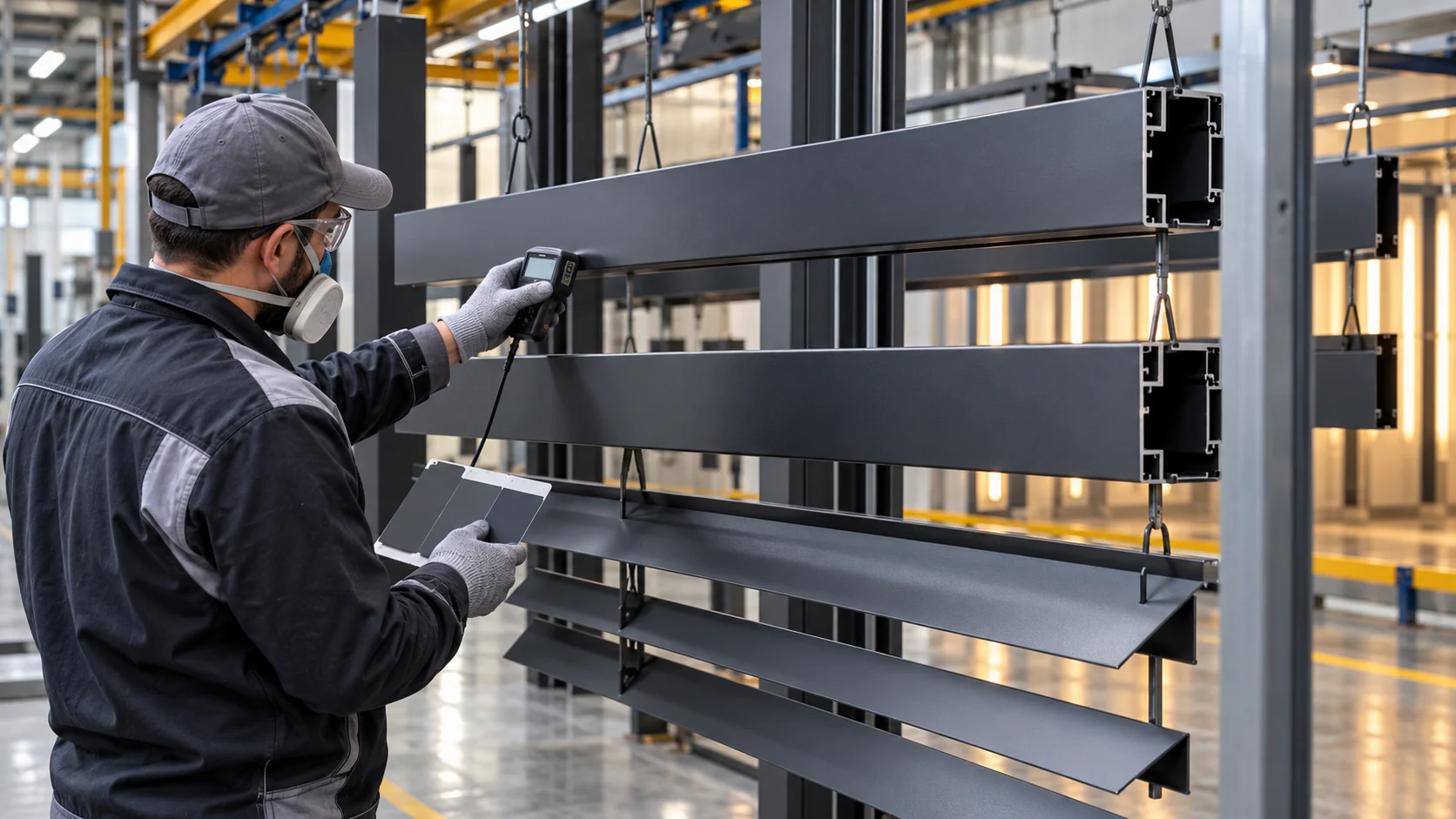
Aluminum does not form the red iron rust associated with carbon steel, but it can still corrode in aggressive environments or at damaged and incompatible interfaces. Steel can be protected through an appropriate coating, galvanizing or other specified system, but exposed edges, welds and damaged areas still need controlled treatment.
For either material, review environmental exposure, pretreatment, coating specification, fastener compatibility, drainage, crevices, cut edges and maintenance access. Coastal and poolside projects deserve a project-specific cleaning and inspection plan rather than a universal durability claim.
- Base material and actual environmental exposure
- Surface preparation and coating system
- Fasteners and dissimilar-metal interfaces
- Drainage and water-trapping details
- Cleaning, inspection and repair procedure
Check roof, drainage and accessory compatibility
A pergola is more than a frame. Rotating louvers need aligned bearings, linkage and drive access. Retractable roofs need guide geometry and stacking space. Gutters need continuous falls and discharge routes. ZIP screens or glass need controlled openings and reliable fixing zones.
Confirm whether these functions are integrated into the proposed profile system or designed as separate interfaces. A visually slim frame is not automatically the better solution if it leaves drainage, wiring or accessory fixing unresolved.
| Interface | Confirm before approval |
|---|---|
| Roof movement | Drive, linkage, alignment and service access |
| Drainage | Gutters, selected outlets and final discharge |
| Electrical | Cable routes, isolation and protected connections |
| Side systems | Opening dimensions, loads, tracks and thresholds |
Choose by project evidence and total responsibility
Use one comparison sheet for dimensions, structure, finish, controls, accessories, packing, freight, local works and exclusions. If one proposal uses steel and another aluminum, normalize the intended performance and delivery scope before comparing price.
LUCY supplies configurable aluminum pergola systems. A final recommendation requires the project location, dimensions, intended use and interfaces. Send the brief through the quote form or contact LUCY on WeChat: Lu260920.
- Do not select from renderings alone
- Do not copy performance values between systems
- Record who designs and approves foundations and attachments
- Confirm the maintenance and warranty documents for the proposed configuration
Project visuals
See the details in context

Common questions
Is aluminum better than steel for a pergola?+
Not universally. Aluminum is well suited to configurable, corrosion-conscious outdoor systems; steel may suit another structural or architectural concept. Compare the approved system and site conditions.
Is a steel pergola stronger than an aluminum pergola?+
Material labels alone do not determine capacity. Section geometry, grade or alloy, connections, supports and engineering criteria determine the designed performance.
Which material is better near the coast?+
Both require an exposure-specific corrosion strategy. Aluminum, coating, fasteners, cut edges and maintenance still need confirmation for a coastal site.
Can aluminum and steel be used together?+
They can be combined only when load transfer, movement, coating and galvanic compatibility are deliberately detailed.
Which pergola is easier to install?+
Installation depends on component size, weight, prefabrication, access, lifting and connection method—not only the material name.
About LUCY
Aluminum pergola systems for project buyers.
LUCY manufactures configurable aluminum pergola systems for residential, hospitality and commercial projects.
Project configuration review
Discuss your pergola project with LUCY.
Share the site location, dimensions, intended use and any available drawings. LUCY will review the relevant system, model and project interfaces.
Get a quote