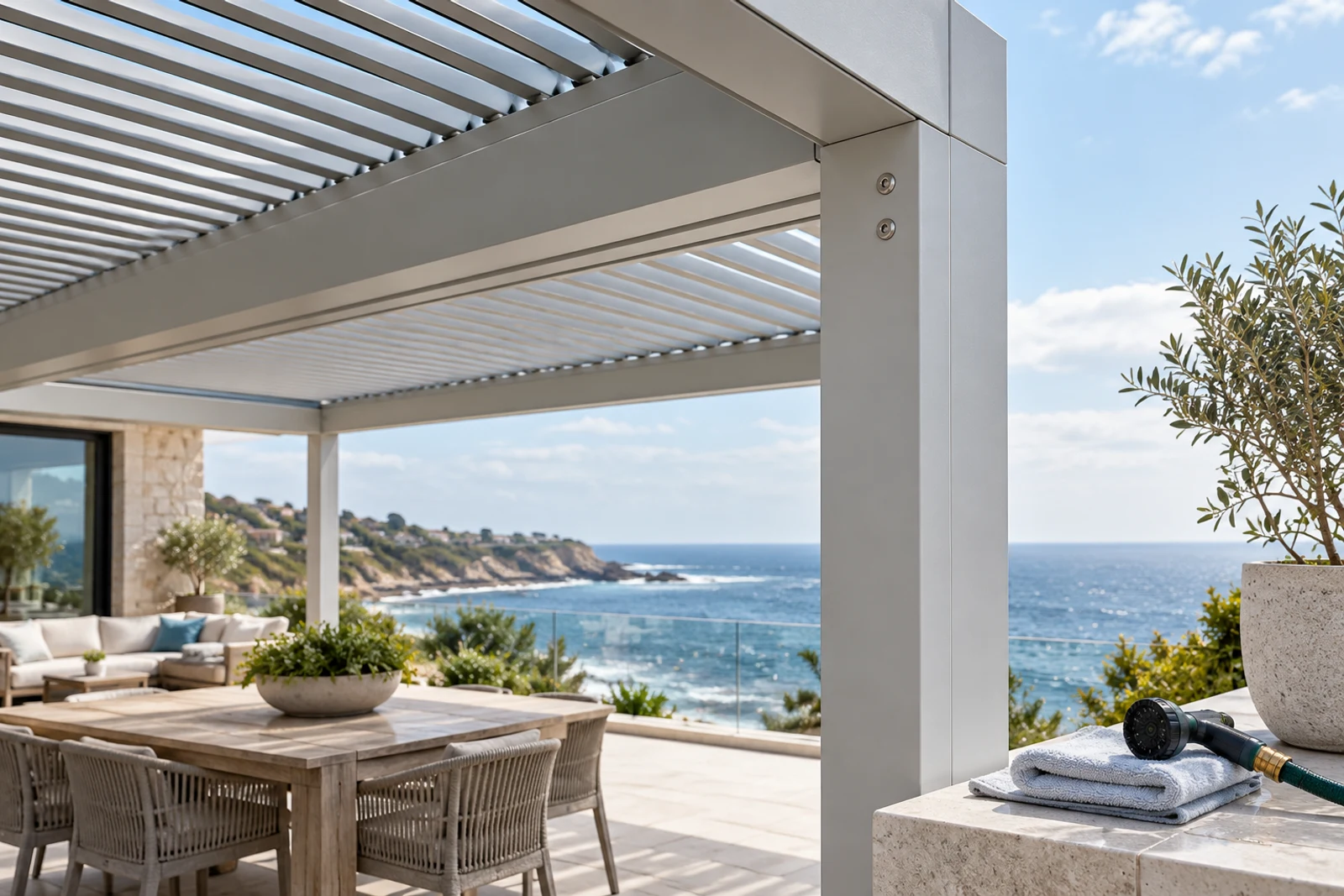
Aluminum does not develop the red iron-oxide rust associated with carbon steel, but it is not immune to corrosion. Salt, pool chemicals, trapped moisture, coating damage, aggressive cleaners and contact with incompatible metals can affect aluminum, fasteners and accessories. Suitable surface preparation, powder coating, drainage, compatible hardware and exposure-based cleaning all matter.
Best for
- Coastal and poolside buyers
- Architects preparing finish specifications
- Dealers comparing aluminum with wood or steel
- Owners planning long-term cleaning and inspection
Key information
Key specifications
- Base material
- Aluminum forms a protective oxide rather than red steel rust
- Finish
- Project-selected pretreatment and powder-coated system
- Interfaces
- Compatible fasteners, sealants and dissimilar-metal isolation
- Care
- Cleaning and inspection matched to actual exposure
Available options
- Approved standard finish
- Project color after availability and sample review
- Exposure-specific hardware discussion
- Documented touch-up or repair process
Quick comparison
| Material condition | Typical appearance | Response |
|---|---|---|
| Carbon-steel rust | Red-brown iron oxide | Protect steel and correct the source |
| Aluminum surface oxidation | Dull or pale change where exposed | Assess environment and finish condition |
| Powder-coat damage | Scratch, chip or under-film change | Use the approved repair route |
| Salt or chemical deposits | White residue or staining | Clean with compatible methods and review frequency |
Rust and corrosion are not the same claim
Aluminum contains no iron in the same way as carbon steel, so it does not form typical red rust. Its natural oxide can help protect the surface. However, aggressive environments and poor detailing can break down that protection or attack interfaces, especially where water and contaminants remain trapped.
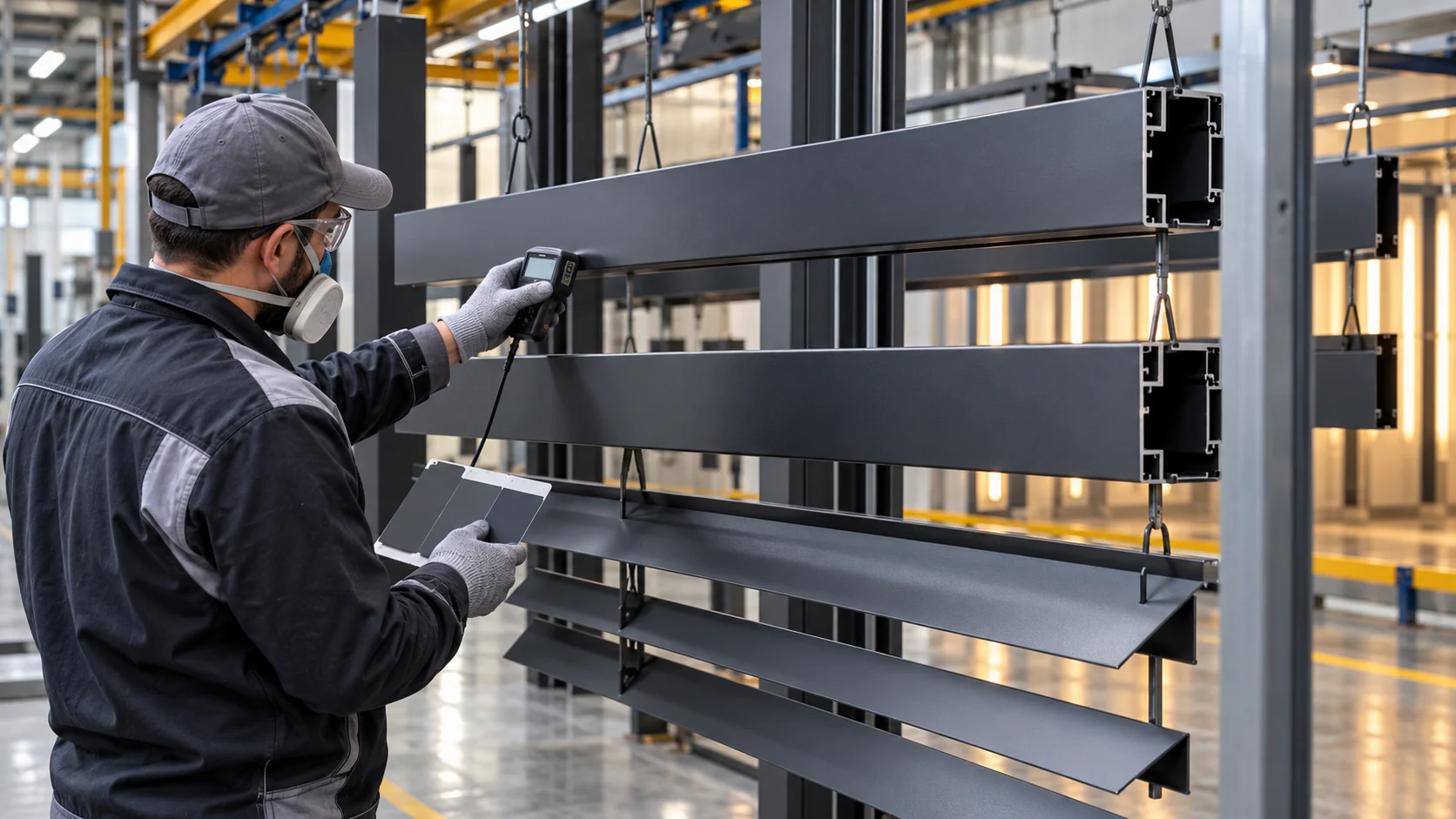
A powder-coated surface adds color and environmental protection, but coating quality depends on alloy, pretreatment, powder, curing, fabrication and handling. Ask for verified finish information for the proposed order rather than assuming every powder coat has identical performance.
The highest-risk details are often interfaces
Cut edges, drilled holes, scratches, swarf and joints can expose or contaminate the substrate. Dissimilar metals in the presence of moisture may create galvanic action. Sealants and cleaning chemicals can also be incompatible with the coating or adjacent components.
Good detailing sheds water, avoids debris traps and allows inspection. Installers should protect profiles during storage and lifting, remove metal swarf and repair approved damage using the specified method rather than a random paint marker.
| Exposure | Design or care focus | Information to provide |
|---|---|---|
| Coastal salt | Finish, hardware and frequent fresh-water cleaning | Distance and direct marine exposure |
| Pool environment | Chloride and chemical splash control | Pool type and cleaning practices |
| Industrial pollution | Deposit removal and compatibility | Known airborne contaminants |
| Normal inland site | Drainage and routine inspection | Landscape, irrigation and shelter |
Cleaning frequency cannot be universal
A sheltered inland pergola and an exposed beachfront pergola do not collect the same deposits. Establish maintenance from the coating supplier and component instructions, then adjust it to observed salt, dust, pollen, pollution and pool residue. Clean before deposits become compacted in joints and drainage channels.
Use soft tools and a mild compatible solution. Avoid abrasive pads and unapproved acids, alkalis or solvents. Do not direct high pressure into seals, motors or electrical equipment. Work at height requires safe access and competent personnel.
What to request before buying
Tell LUCY the project location and whether it is coastal, poolside or exposed to unusual chemicals. Request the available aluminum, pretreatment, powder-coat, hardware and maintenance information for the selected model. If a specific standard or warranty condition is required, it must appear in the written project documents.
Keep finish samples, batch references, cleaning records and photographs of damage. Early investigation is more useful than covering corrosion with an unapproved repair that hides the cause.
- Actual project location and exposure
- Verified coating and pretreatment information
- Fastener and accessory compatibility
- Cleaning and touch-up instructions
- Written warranty scope and exclusions
Project visuals
See the details in context
Common questions
Does powder-coated aluminum need maintenance?+
Yes. It needs compatible cleaning, drainage care and inspection suited to the environment.
Is aluminum suitable near the ocean?+
It can be, but the finish, hardware, detailing and cleaning plan must respond to the actual marine exposure.
Can steel fasteners cause a problem?+
Material compatibility, grade, isolation and moisture conditions must be reviewed; do not substitute hardware without approval.
Can scratches be painted over?+
Use the approved assessment and repair method for the supplied finish rather than an unspecified paint.
About LUCY
Manufacturer-focused guidance from LUCY.
This guide addresses does an aluminum pergola rust from the perspective of a configurable aluminum pergola manufacturer. Product selection, OEM / ODM and project coordination remain tied to verified site and technical inputs.
For product information, catalogues or a factory quote, contact LUCY on WeChat: Lu260920
Learn about LUCY manufacturing →Project configuration review
Discuss your pergola project with LUCY.
If this does an aluminum pergola rust guide matches your project question, send the location, dimensions and intended use for a project-specific review.
Get a quote