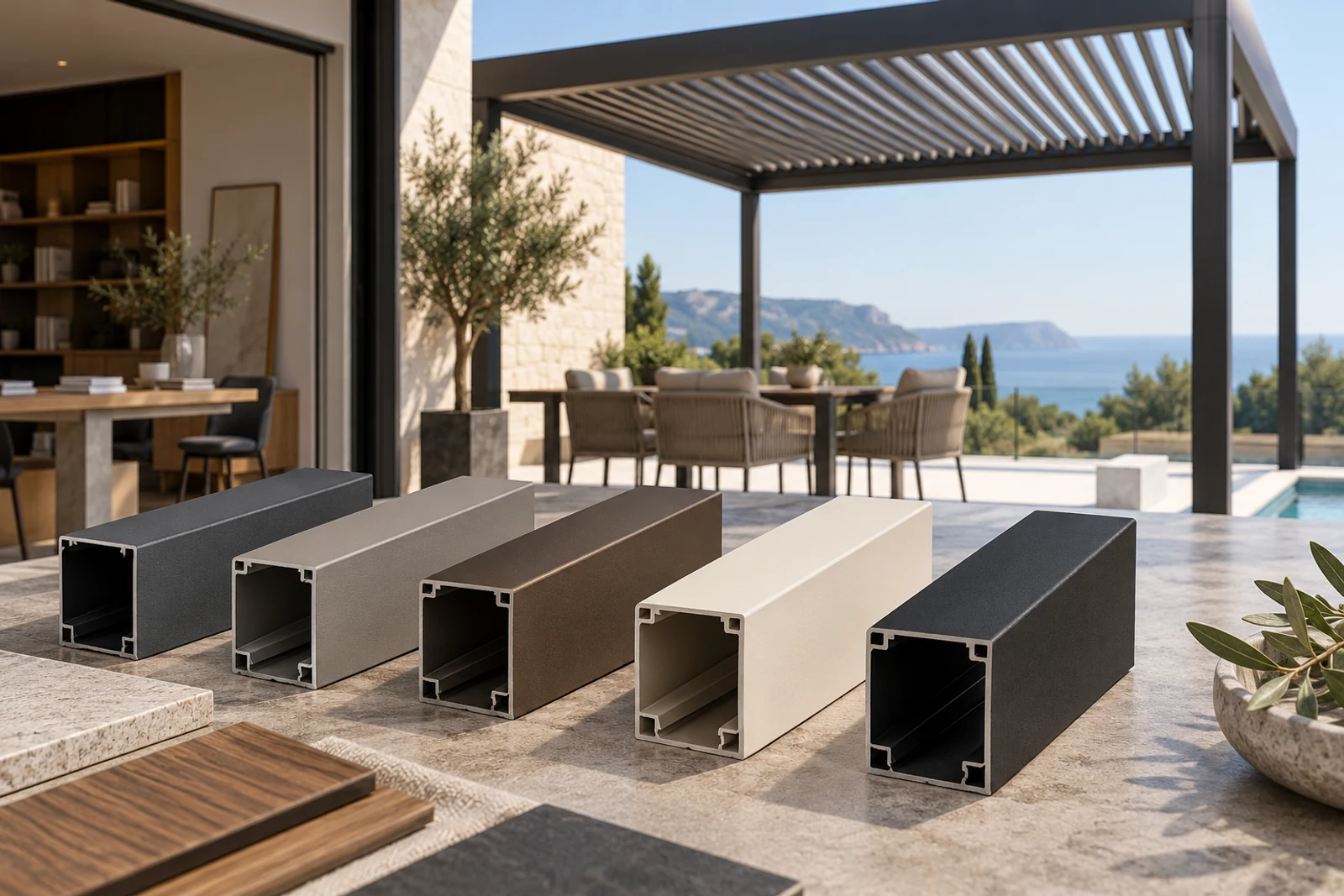
Choose a pergola color from the building materials, surrounding light, desired visual weight, environmental exposure and maintenance plan. Dark charcoal creates a strong frame, lighter neutrals reduce visual contrast, and bronze or warm gray can connect stone and timber palettes. Always approve a physical coated sample because screens, photography, gloss and texture can change how a color appears.
Best for
- Architects coordinating a complete exterior palette
- Homeowners choosing between dark and light structures
- Hotels and restaurants standardizing finishes
- Dealers building a controlled color range
Key information
Key specifications
- Approval method
- Physical sample viewed beside the project materials
- Variables
- Color, gloss, texture, profile orientation and surrounding light
- Coordination
- Frame, roof, screens, glass hardware, lighting and façade
- Specification
- Final finish recorded in the approved order documents
Available options
- Charcoal or black architectural frame
- Warm gray or bronze-toned finish
- Light neutral finish
- Project-specific finish subject to availability and written approval
Quick comparison
| Color direction | Visual effect | Review carefully |
|---|---|---|
| Dark charcoal or black | Strong outline and shadow | Dust, pollen, water marks and heat in direct sun |
| Warm gray or bronze | Connects stone, timber and warm façades | Undertone beside actual materials |
| Off-white or light neutral | Lighter visual presence | Glare, dirt visibility and color stability |
| Custom match | Closer palette coordination | Availability, batch control and sample approval |
Start with the architecture, not a trend
Photograph the façade, paving, window frames, roof, stone, timber and landscape in neutral daylight. Decide whether the pergola should read as a strong separate pavilion, align with existing metalwork or sit quietly against the building.
Matching every material is not always desirable. A deliberate related neutral can be more stable than an attempted match made from a photograph. Review the pergola as a large three-dimensional frame that creates both highlights and deep shade.
- Façade and window-frame color
- Paving, stone and timber undertones
- Indoor view through doors and windows
- Landscape colors through the seasons
- Desired contrast and visual weight
Light, texture and orientation change appearance
The same coating can look lighter in direct sun, darker under the roof and different again beside warm interior lighting. Matte, fine-textured and smoother finishes scatter light differently. Horizontal louvers collect light and dust differently from vertical posts.
View samples upright and flat, in sun and shade, and next to the real project materials. Digital color codes and rendered images are useful for narrowing choices but should not be the final approval method.
| Check | Why it matters | Practical test |
|---|---|---|
| Sun and shade | The frame contains both at the same time | Move the sample around the terrace |
| Gloss and texture | Changes reflection and perceived depth | Compare samples at several angles |
| Warm night lighting | Can shift gray or white tones | View beside the intended lamp color |
| Large area | A profile sample represents a much larger structure | Review a longer coated extrusion if available |
Consider exposure and maintenance
No color is maintenance-free. Dark finishes can show pale dust, salt and dried water; light finishes can show soil, pollution and biological marks. Trees, coast, pools, cooking and irrigation all change what accumulates on the frame.
Color choice does not replace a suitable finish specification. Confirm available pretreatment, powder, texture and care instructions for the selected project. Avoid unsupported assumptions about universal coating life or coastal performance.
- Expected dust, salt, pollen or cooking residue
- Safe access for washing and inspection
- Compatibility of fasteners, sealants and touch-up method
- Finish sample and batch reference retained for the order
Coordinate every visible accessory
ZIP-screen cassettes, side guides, glass tracks, grilles, motors, fastener covers and lighting channels can create a fragmented appearance if their finishes are selected separately. Build one elevation schedule that shows which parts match and which intentionally contrast.
For dealer or multi-site programs, limit the initial range to colors that can be documented, sampled and repeated. Record the approved sample, product code, gloss or texture and any permitted variation before production.
- Pergola posts, beams and louvers
- Screen cassette, guides and fabric
- Glass tracks and hardware
- Privacy panels or louver walls
- Lighting channels and visible covers
- Adjacent façade metalwork
Project visuals
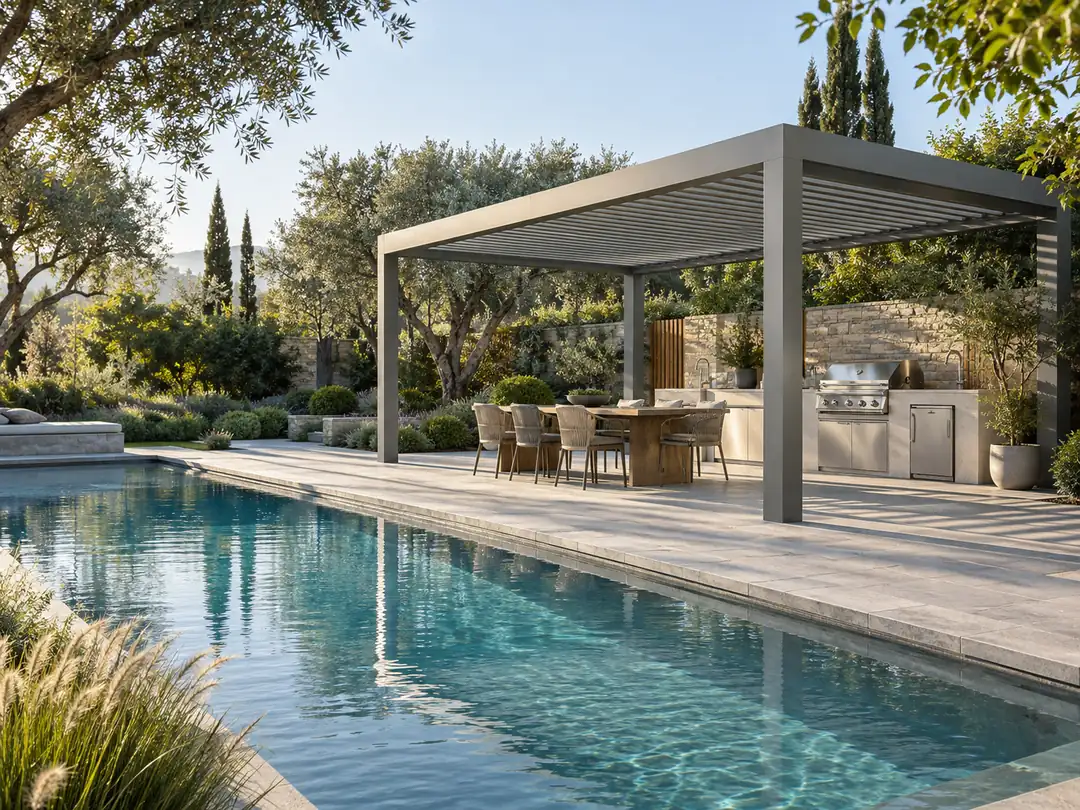
See the details in context

Common questions
What is the most popular pergola color?+
Dark neutrals are common in contemporary projects, but the right choice should come from the actual architecture, exposure and maintenance priorities.
Can I choose a custom color?+
Project-specific finishes may be reviewed, subject to availability, quantity, process and written sample approval.
Will the website color match the finished pergola?+
Not reliably. Screens and photographs vary, so approve a physical coated sample for appearance-sensitive work.
Should louvers and frame use the same color?+
They can, but a coordinated contrast is also possible when the selected system and production scope allow it.
About LUCY
Manufacturer-focused guidance from LUCY.
This guide addresses how to choose pergola color from the perspective of a configurable aluminum pergola manufacturer. Product selection, OEM / ODM and project coordination remain tied to verified site and technical inputs.
For product information, catalogues or a factory quote, contact LUCY on WeChat: Lu260920
Learn about LUCY manufacturing →Project configuration review
Discuss your pergola project with LUCY.
If this how to choose pergola color guide matches your project question, send the location, dimensions and intended use for a project-specific review.
Get a quote