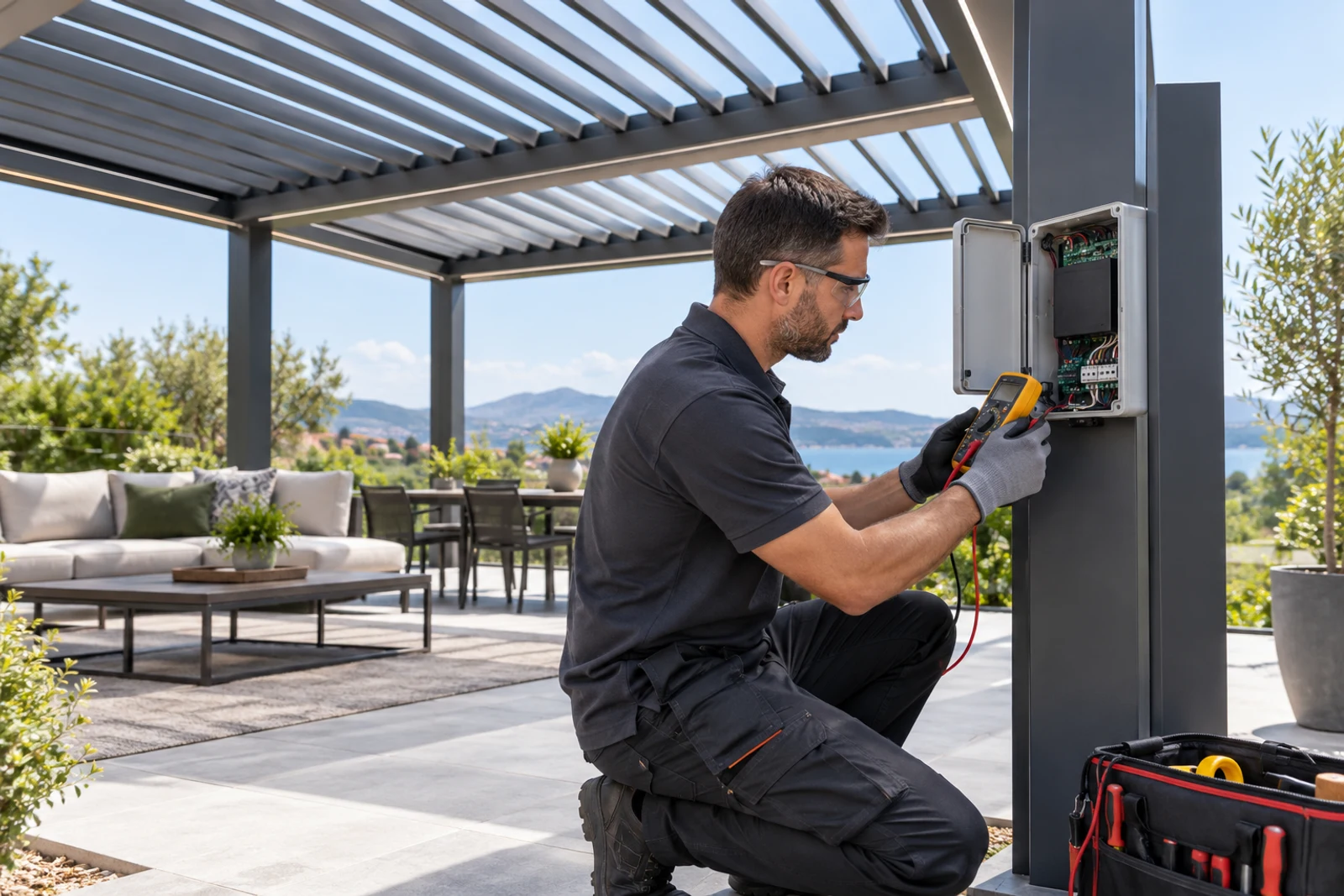
During a power outage, a motorized pergola normally remains in its current roof position unless the approved system includes a separate manual or backup procedure. Do not force louvers, linkages or screens by hand. First confirm whether the loss affects the building, pergola circuit, controller or remote, then follow the product-specific instructions or contact a qualified service technician.
Best for
- Owners of motorized pergolas
- Restaurant and hotel operations teams
- Installers preparing handover documents
- Buyers comparing control and service options
Key information
Key specifications
- Default condition
- Roof generally remains where operation stopped
- First check
- Building supply, dedicated circuit and approved local controls
- Manual movement
- Only if documented for the exact drive system
- Service
- Qualified person using the order and control records
Available options
- Local wall control
- Compatible remote or grouped controller
- Documented manual provision where available
- Project-specific backup strategy designed by qualified trades
Quick comparison
| Symptom | Safe first check | Do not do |
|---|---|---|
| Nothing operates | Confirm building and dedicated circuit status | Open live electrical equipment |
| One zone stops | Check the labeled controller and obstruction | Force the blades |
| Remote fails | Use the approved local control and check remote power | Repeatedly reprogram without instructions |
| Screen stops | Keep the opening clear and follow its manual | Pull the fabric or side guides |
Expect the roof to stay where it stopped
A powered drive needs electricity and a valid control signal. If either is unavailable, the roof is not expected to complete a movement automatically. The actual position may be open, angled or closed depending on when the outage occurred.
Do not describe a universal fail-open or fail-closed behavior unless it is documented for the specific supplied configuration. Motors, controllers, sensors and backup provisions differ. The approved wiring and product manual take priority over general advice.
Use a safe troubleshooting order
Check whether the wider building has power and whether other pergola functions, such as lighting, respond. Look for a clearly labeled local isolator, breaker or controller status only where the operator is authorized to do so. Remove visible loose objects from the blade path without climbing or reaching into the mechanism.
If power is present but the unit does not move, stop repeated commands. A blocked blade, lost programming, limit issue, controller fault or drive problem requires the correct diagnostic route. Record the roof position, weather, sounds, indicator behavior and events before the fault.
- Keep people clear of moving or suspended components
- Do not open electrical enclosures unless qualified
- Do not bypass sensors or protective devices
- Photograph labels and indicators for service support
Manual override is model-specific
Some drive systems may include a documented manual operation method; others do not. A crank point, release or emergency procedure should never be assumed from a different product. Using the wrong method can damage linkages, alter limits or create an uncontrolled movement.
If manual operation is important to the project, raise it before ordering. Confirm availability, access, tools, operating steps and whether it can be used under load or in adverse weather. Include the final instructions in staff training.
| Question | Why it matters | Evidence needed |
|---|---|---|
| Is manual operation provided? | Not every drive includes it | Approved model documentation |
| Where is access? | Furniture or ceilings may block it | Coordinated drawing |
| Who may use it? | Movement can create safety risks | Handover procedure |
| What happens after power returns? | Limits or controls may require checking | Commissioning instructions |
Plan continuity for commercial sites
Restaurants and hotels should include pergola operation in their weather and outage plans. Staff need to know the safe roof and screen positions, local controls, isolation point and who to contact. A backup-power decision belongs to the electrical design and should consider the complete loads and control behavior, not just the pergola motor nameplate.
Keep the project number, model, motor and controller records available. Clear documentation shortens diagnosis and helps avoid incompatible replacement parts.
Project visuals
See the details in context
Common questions
Can I push the louvers closed by hand?+
Do not force them. Use only the manual method documented for the exact supplied system.
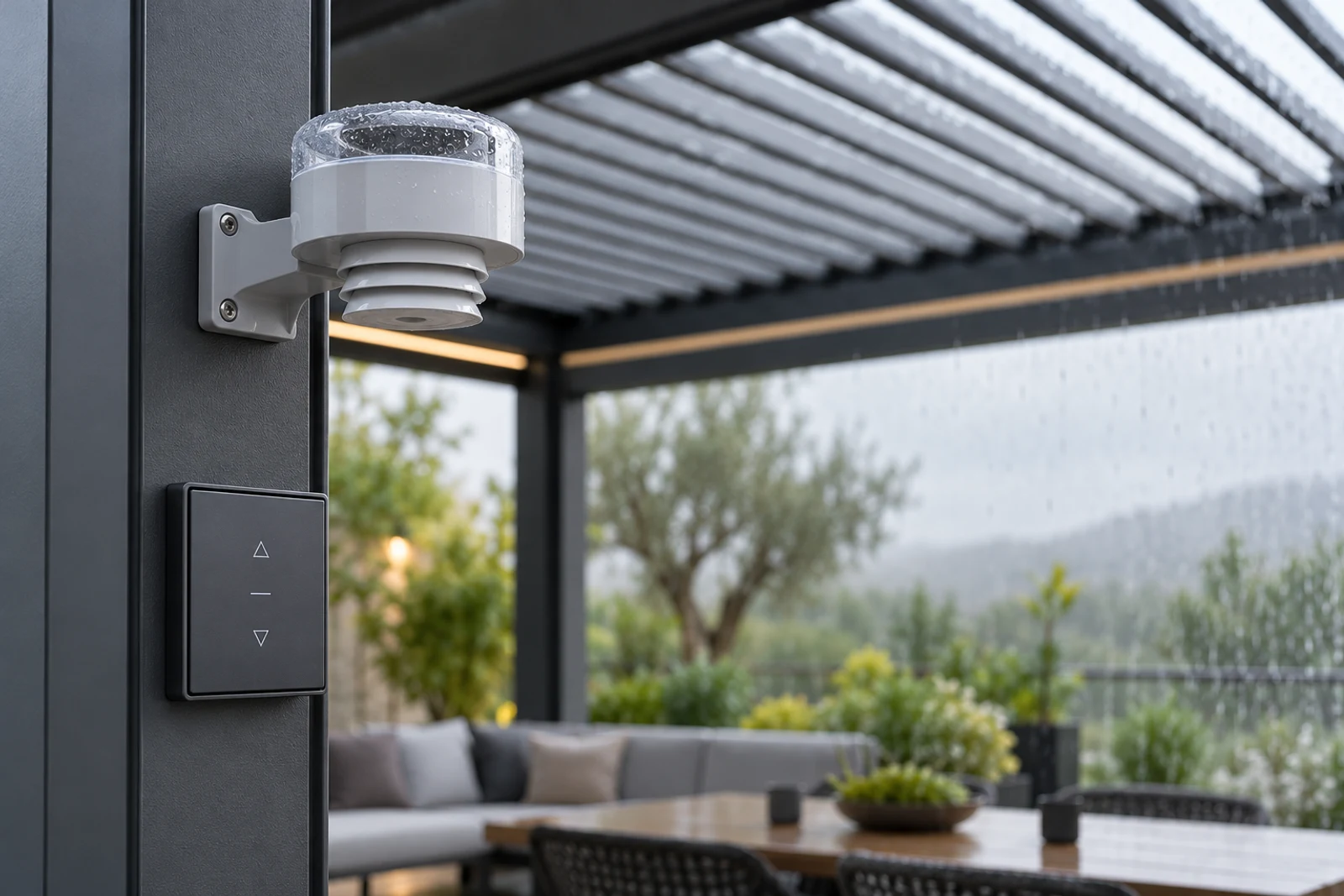
Will a rain sensor work during a power outage?+
A sensor cannot command normal powered movement when the required controller or motor supply is unavailable.
Does the motor lose its settings?+
Behavior depends on the selected control system. Follow its restart and commissioning instructions.
Should I add a battery backup?+
That is a project-specific electrical and control decision; confirm compatibility, loads and safe behavior with qualified suppliers and trades.
About LUCY
Manufacturer-focused guidance from LUCY.
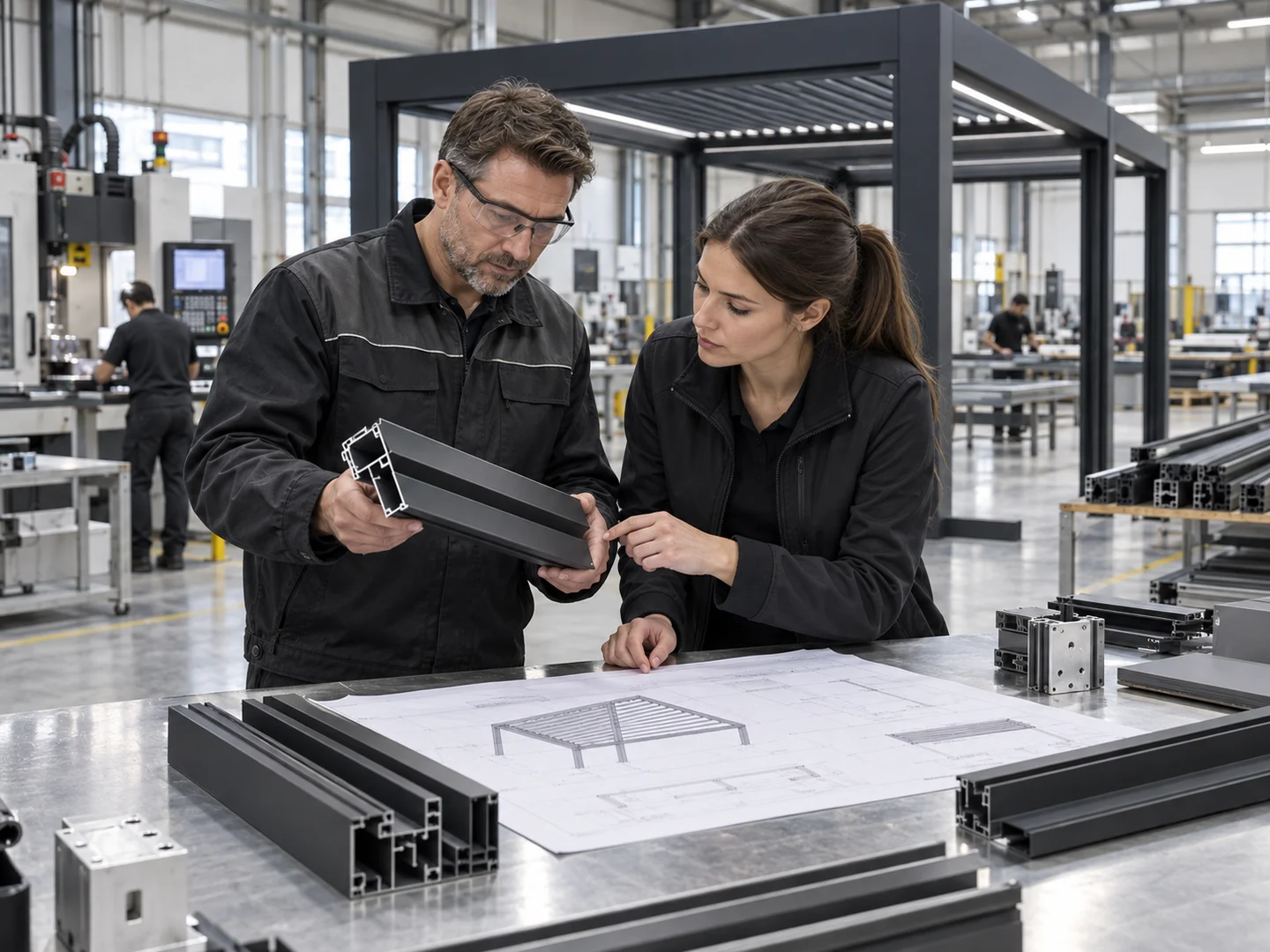
This guide addresses motorized pergola power outage from the perspective of a configurable aluminum pergola manufacturer. Product selection, OEM / ODM and project coordination remain tied to verified site and technical inputs.
For product information, catalogues or a factory quote, contact LUCY on WeChat: Lu260920
Learn about LUCY manufacturing →Project configuration review
Discuss your pergola project with LUCY.
If this motorized pergola power outage guide matches your project question, send the location, dimensions and intended use for a project-specific review.
Get a quote