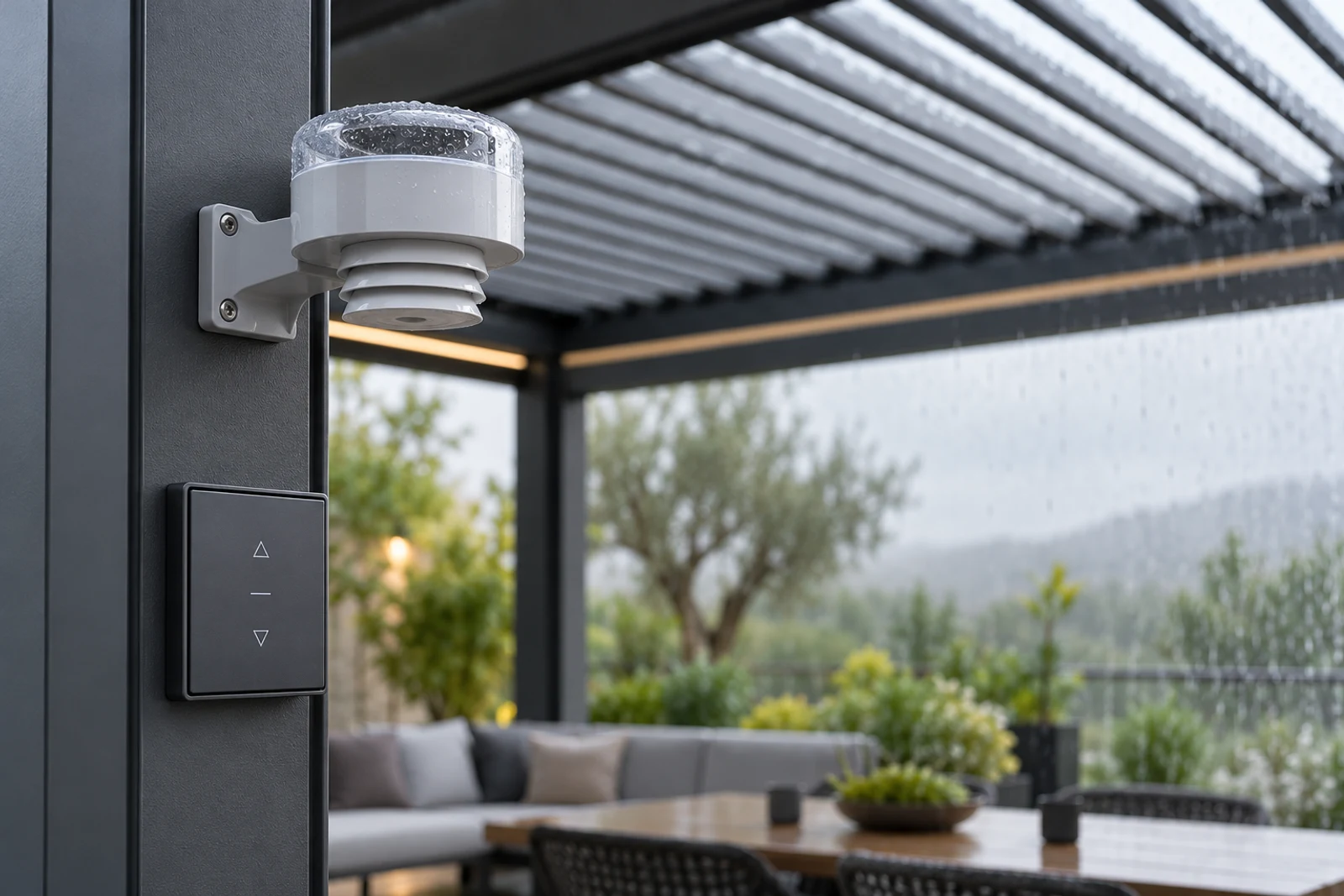
A compatible rain sensor detects moisture and sends a signal to the configured pergola controller. Depending on the approved system logic, that signal may command motorized louvers to move to a defined position. A sensor supports operation; it does not guarantee perfect rain exclusion, replace drainage maintenance or decide the safe response to every wind, snow or ice condition.
Best for
- Frequently used motorized pergolas
- Hospitality sites needing repeatable staff procedures
- Homes where changing weather may arrive quickly
- Projects already coordinating compatible automation
Key information
Key specifications
- Function
- Detects moisture and signals compatible control logic
- Response
- Defined by the selected motor, controller and commissioning
- Placement
- Exposed enough to sense rain but accessible for service
- Verification
- Tested during commissioning and periodic maintenance
Available options
- Standalone compatible sensor
- Grouped roof-zone response
- Wall switch or remote override where approved
- Building-control interface after compatibility review
Quick comparison
| Control method | Strength | Limitation |
|---|---|---|
| Wall switch | Clear local control | Requires someone at the switch |
| Remote | Convenient line-of-use control | Can be misplaced or out of range |
| Rain sensor | Automatic moisture-triggered signal | Does not assess every site condition |
| Smart interface | Central scheduling or remote access | Requires compatible hardware and reliable setup |
A sensor is one part of a control chain
The device does not move the roof by itself. It must be compatible with the receiver or controller, assigned to the correct motor group and configured with an approved response. Power, communication and motor travel limits all need to function before automation can work.
Request a clear control schedule showing which roof zones and accessories respond to each command. Screens may need a different severe-weather position from the louvers, so a single generic automation rule should not be assumed.
- Confirm motor and controller compatibility
- Define the response for every roof zone
- Label switches and control groups
- Retain programming and reset instructions
Placement and commissioning matter
A sensor sheltered too deeply under the roof may react late; one exposed to irrigation, condensation or roof runoff may trigger when it is not raining. The final location should follow the component instructions and remain accessible for safe cleaning and testing.
Commissioning should verify detection, communication, roof movement and stop behavior without creating unsafe wet electrical work. Record the result and show the operator how to recognize a fault or override the system using the approved procedure.
| Check | Purpose | Record |
|---|---|---|
| Sensor location | Reliable exposure without direct runoff | Photograph and drawing reference |
| Zone assignment | Moves the intended roof group | Control schedule |
| Travel limits | Stops in the approved positions | Commissioning record |
| Manual control | Provides the approved local operation route | Handover instructions |
Automation does not remove weather responsibility
Rain, wind, snow and ice are different conditions. Closing may be useful for ordinary rainfall, while a high-wind procedure may require a different roof or screen position. Frozen or obstructed mechanisms should not be forced. Follow the actual product instructions and project-specific operating limits.
Sensors can also fail, lose power or become dirty. Furniture, floor drainage and building interfaces should not rely on a sensor as the only protection against water. Staff and owners still need a written weather procedure.
Questions to ask before specifying a sensor
Ask whether the sensor is an available option for the chosen LUCY model, which controller it uses, how many zones it can command and what happens after the sensor dries. Confirm who supplies, installs, programs and tests it, and who supports it after handover.
Do not order a generic third-party device solely from a marketing description. Voltage, signal protocol, control logic, warranty and enclosure suitability must match the approved system.
- Is the sensor compatible with this exact motor and controller?
- What position will each roof zone move to?
- How is the response tested and reset?
- What is the safe procedure if the sensor or power fails?
Project visuals
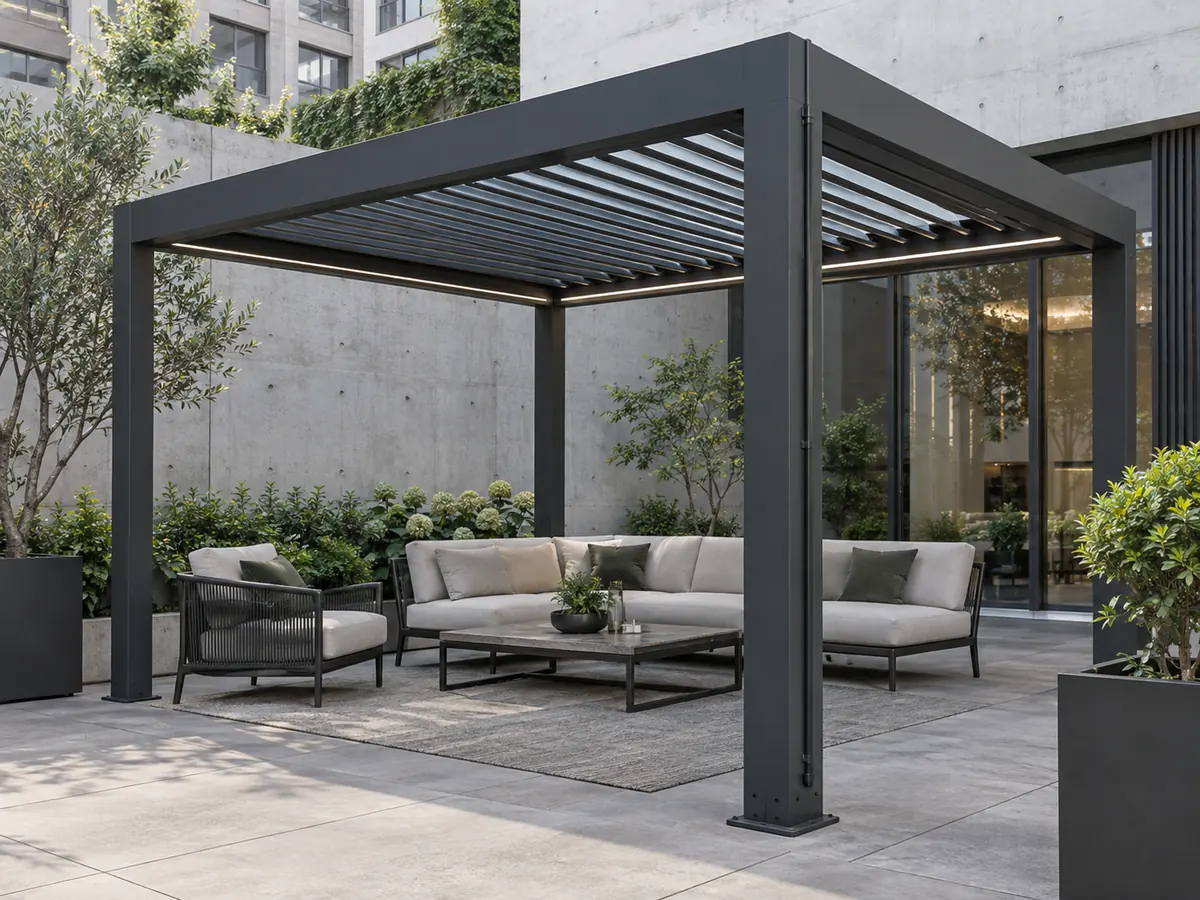
See the details in context

Common questions
Does a rain sensor make a pergola waterproof?+
No. It can trigger a configured movement, while rain performance still depends on the roof, installation, drainage, maintenance and weather.
Will the sensor also protect against wind?+
Not unless a compatible system includes separate wind sensing and approved control logic.
Can one sensor control several pergola bays?+
Possibly, but zone capacity and behavior must be confirmed for the selected controller.
Does the sensor need maintenance?+
Yes. Follow the component instructions for cleaning, testing and replacement, and keep its sensing area accessible.
About LUCY
Manufacturer-focused guidance from LUCY.
This guide addresses pergola rain sensor from the perspective of a configurable aluminum pergola manufacturer. Product selection, OEM / ODM and project coordination remain tied to verified site and technical inputs.
For product information, catalogues or a factory quote, contact LUCY on WeChat: Lu260920
Learn about LUCY manufacturing →Project configuration review
Discuss your pergola project with LUCY.
If this pergola rain sensor guide matches your project question, send the location, dimensions and intended use for a project-specific review.
Get a quote