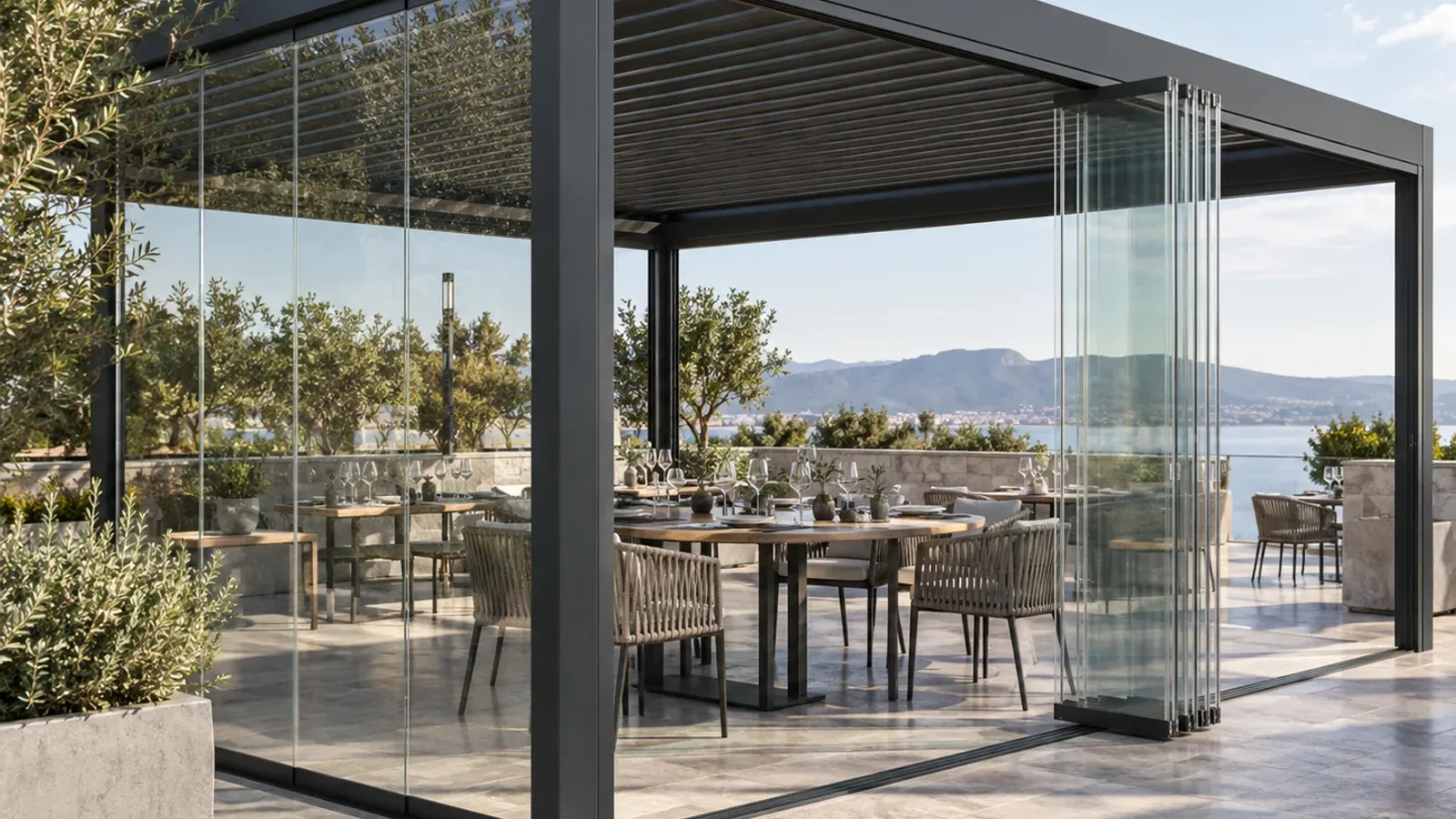
Choose a ZIP screen for retractable fabric coverage, glare control, privacy and airflow-aware side protection. Choose sliding or folding glass when transparent physical enclosure is the priority. Neither creates conditioned indoor space automatically, and both require opening, structure, drainage and local-code review.
Side-by-side comparison
Use this table as an early selection tool. Catalogue references on LUCY model pages remain subject to technical confirmation, project dimensions, site exposure, foundations, installation method and local requirements.
| Factor | ZIP screen | Glass enclosure |
|---|---|---|
| Material | Guided technical fabric | Sliding or folding glass panels |
| View | Filtered when lowered | Transparent when closed |
| Airflow | Reduced but not sealed | Depends on open panel position |
| Loads | Cassette, guides and wind procedure | Panel weight, tracks and support |
| Best fit | Glare, privacy and retractable side cover | Transparent enclosure and stronger spatial separation |
How to choose
Choose by roof movement, intended use and the information that can be verified for the actual site—not by model number alone.
- Use ZIP screens where retractability and solar control matter.
- Use glass where views and transparent enclosure matter.
- Do not treat either system as an airtight wall.
- Check egress, ventilation, tracks, drainage and cleaning access.
Best applications
Residential projects usually prioritize appearance, simple operation and a comfortable post layout. Restaurants and hotels also need service routes, operating zones, drainage, maintenance access and frequent-use planning. Large or exposed sites require a project-specific structural review.
- Villa terraces and patios
- Restaurant and café seating
- Hotel, resort and rooftop hospitality
- Dealer and contractor projects requiring a documented configuration
Recommended accessories
ZIP screens, glass, privacy grilles, LED lighting, fans and heaters can change loads, wiring, ventilation and daily operation. Submit each required side and opening before final model selection.
- ZIP screen for glare, privacy and guided side coverage
- Sliding or folding glass for transparent enclosure planning
- Integrated LED lighting for ambient or task zones
- Heater or fan only after clearance, mounting and electrical review
Quote checklist
A useful comparison needs the same project brief for both options. Send the site city, clear width and projection, finished height, mounting condition, preferred roof movement, accessory sides and photos or drawings. LUCY will identify the technical items still requiring confirmation.
- Dimensions and module quantity
- Freestanding or attached layout
- Wind, rain or snow context
- Accessory openings and control preferences
- Destination and project schedule
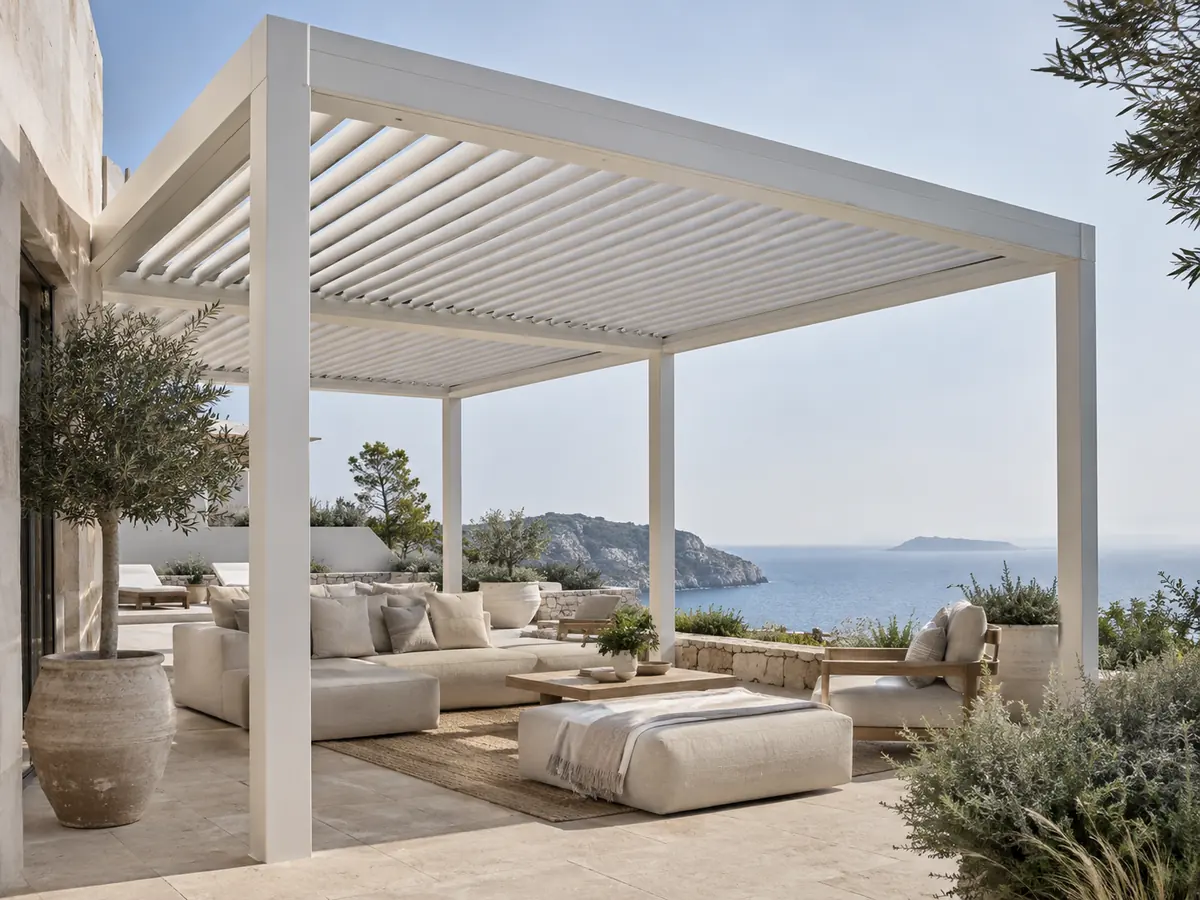
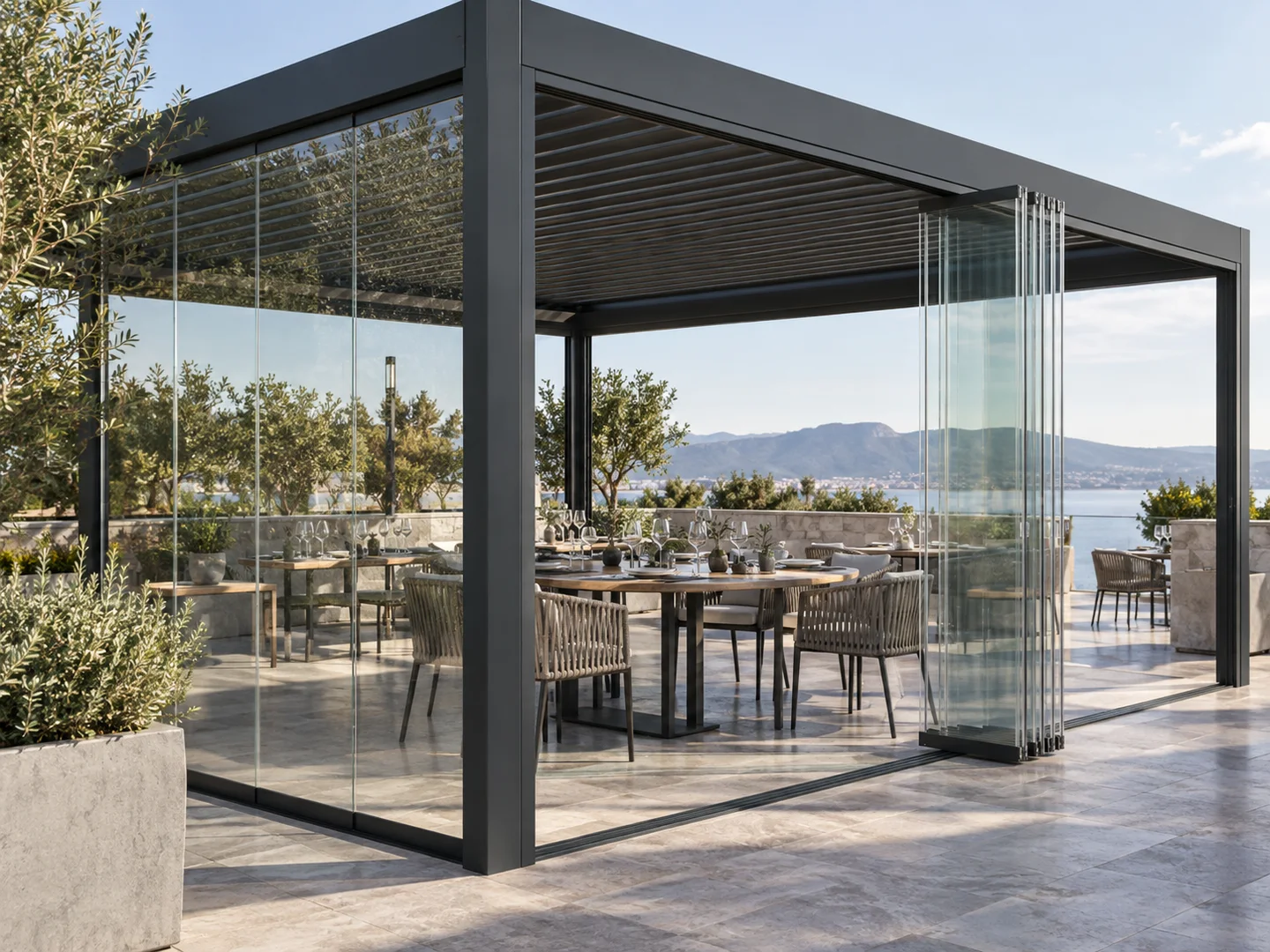
Project visuals
See the details in context
Common questions
Can ZIP screens and glass be combined?+
They may be used on different elevations after structure, tracks, ventilation and circulation are coordinated.
Which is better for restaurant terraces?+
ZIP screens suit flexible daily operation; glass may suit transparent enclosure. Local rules and project use decide.
Does glass make a pergola waterproof?+
No. Interfaces, roof drainage, ventilation and wind-driven rain still require review.
Which is lighter?+
A ZIP screen is generally the lighter system, but actual loads and fixings must come from verified product data.
About LUCY
Manufacturer-focused guidance from LUCY.
This guide addresses ZIP screen vs glass enclosure from the perspective of a configurable aluminum pergola manufacturer. Product selection, OEM / ODM and project coordination remain tied to verified site and technical inputs.
For product information, catalogues or a factory quote, contact LUCY on WeChat: Lu260920
Learn about LUCY manufacturing →Project configuration review
Discuss your pergola project with LUCY.
If this ZIP screen vs glass enclosure guide matches your project question, send the location, dimensions and intended use for a project-specific review.
Get a quote