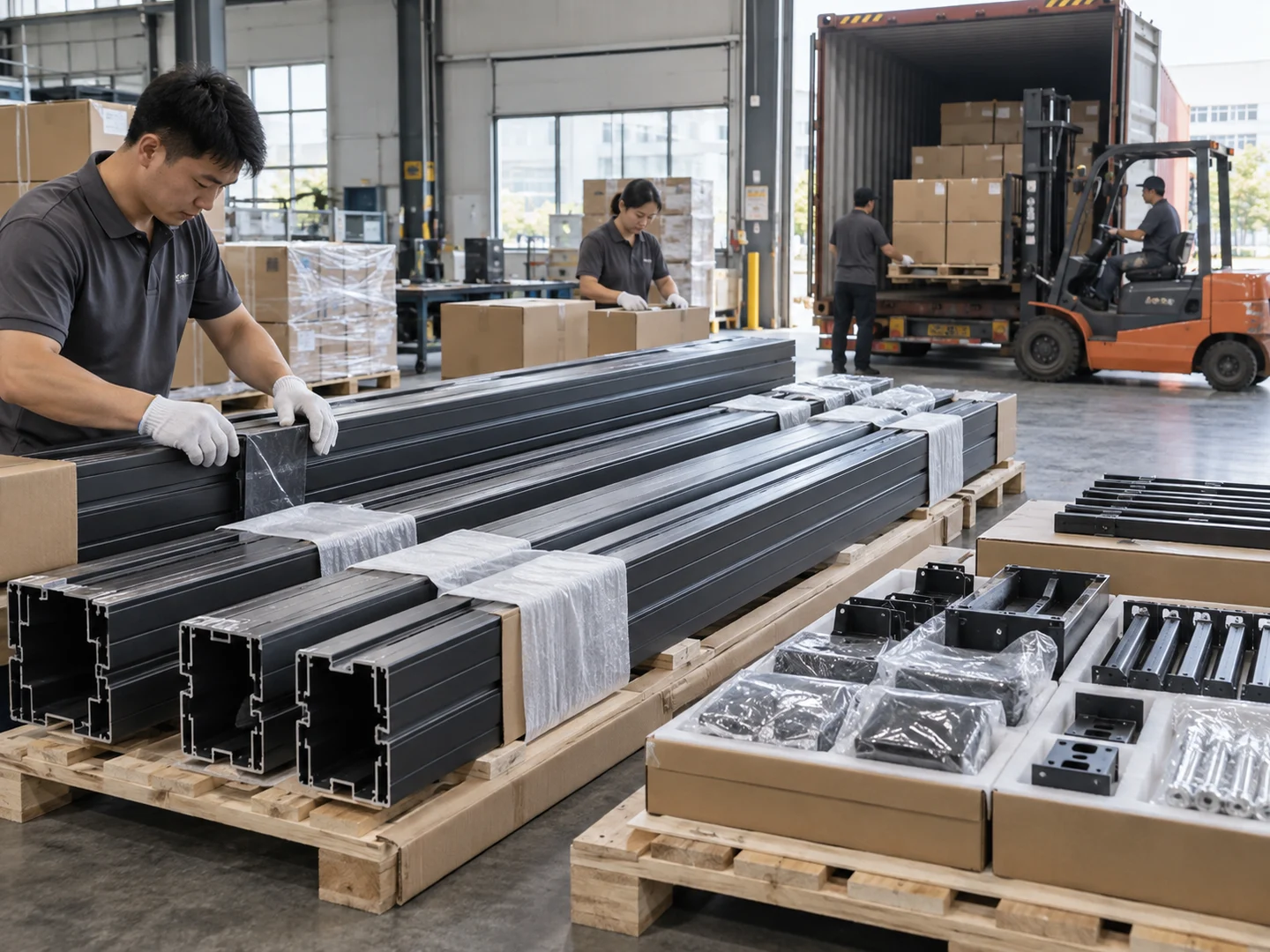
LUCY export packaging is planned around long aluminum profiles, moving-roof parts, motors, controls, hardware and accessories in the approved order. The objective is to protect surfaces, identify modules and help the buyer plan freight, unloading, storage and installation. Final packing method, package dimensions, weights and shipping terms are confirmed for the actual project.
Best for
- Dealers receiving container or consolidated orders
- Contractors planning crane, forklift or manual unloading
- Multi-module projects that need identifiable packages
- OEM programs requiring consistent labels and presentation
Key information
Key specifications
- Packing basis
- Approved component and module schedule
- Long profiles
- Supported, separated and protected at edges and ends
- Small parts
- Grouped hardware, motors and controls with package references
- Buyer planning
- Packing list, package dimensions and weights when confirmed
- Delivery boundary
- Incoterm, customs, unloading and local transport defined in writing
Available options
- Project or module labels
- Hardware kitting by installation sequence
- OEM package marks where agreed
- Packing photographs or inspection records where agreed
- Shipment coordination according to the written Incoterm
Quick comparison
| Stage | LUCY supply information | Buyer responsibility |
|---|---|---|
| Before packing | Approved component and label plan | Confirm delivery address and receiving limits |
| Before dispatch | Packing list and agreed shipment documents | Arrange freight, customs and insurance by Incoterm |
| Arrival | Package references and product documents | Inspect condition, count packages and record damage |
| Site storage | Handling guidance where supplied | Keep parts protected, dry and identifiable |
1. Build the packing plan from the project layout
A pergola shipment is easier to receive when package references follow the approved modules and component schedule. Long frame profiles, roof components, accessory tracks, motors, controls, seals and hardware should not become an unidentified mixed load.
The final plan depends on order quantity, profile length, container or freight route, accessory mix and destination handling. Packaging claims should therefore describe the actual shipment rather than a universal crate specification.
- Module and component references
- Destination and freight method
- Maximum package handling limits
- Accessory and electrical groups
2. Protect profiles, finishes and components
Long aluminum sections need support against bending, separation between finished surfaces and protection at vulnerable corners and ends. Motors, controls, glass-related hardware and smaller components require appropriately grouped inner packages.
Packaging reduces normal transport risk but cannot guarantee damage-free delivery under every carrier condition. Freight responsibility, insurance and claim procedure should follow the agreed commercial term.
| Component | Packing priority |
|---|---|
| Aluminum profiles | Length support, surface separation and end protection |
| Roof parts | Prevent movement and identify module group |
| Motors and controls | Dry, labeled inner packing and quantity check |
| Hardware | Kitted bags or boxes linked to the component schedule |
| Accessories | Separate tracks, fabrics, lighting or fragile parts as required |
3. Documents for freight and receiving
The commercial and shipping documents depend on the destination and agreed Incoterm. The buyer, freight forwarder and customs broker should confirm required information before dispatch. LUCY can provide agreed order and packing information; local taxes, permits, customs decisions and final-mile requirements remain outside a generic website promise.
Package dimensions and weights help the receiver choose unloading equipment and storage space. They should be taken from the final shipment plan, not estimated from a product-page image.
4. Arrival inspection and site storage
The receiver should compare the package count with transport documents before unloading, photograph external damage, and record shortages or carrier issues promptly. Packages should remain identifiable until installation teams have checked them against the drawings and component list.
Store profiles and electrical components according to supplied handling information, away from standing water, uncontrolled traffic and conditions that can damage finish or packaging. Opening every package without an installation plan can make later reconciliation harder.
Common questions
Does LUCY provide shipping to every country?+
Destination, route and commercial term must be reviewed for the actual order; universal delivery availability is not claimed.
Are duties and taxes included?+
Only when the written Incoterm and quotation say so. Buyers should confirm customs and local charges with their broker.
Can packages use private-label marks?+
OEM labels and packaging presentation can be discussed according to product, quantity and agreed scope.
What should be checked on arrival?+
Check package count, external condition, labels and transport documents before moving or opening the shipment.
Project configuration review
Discuss your pergola project with LUCY.
Share your buyer type, project location, intended use and available drawings. LUCY will route the enquiry to the relevant product, engineering or manufacturing review.
Get a quote