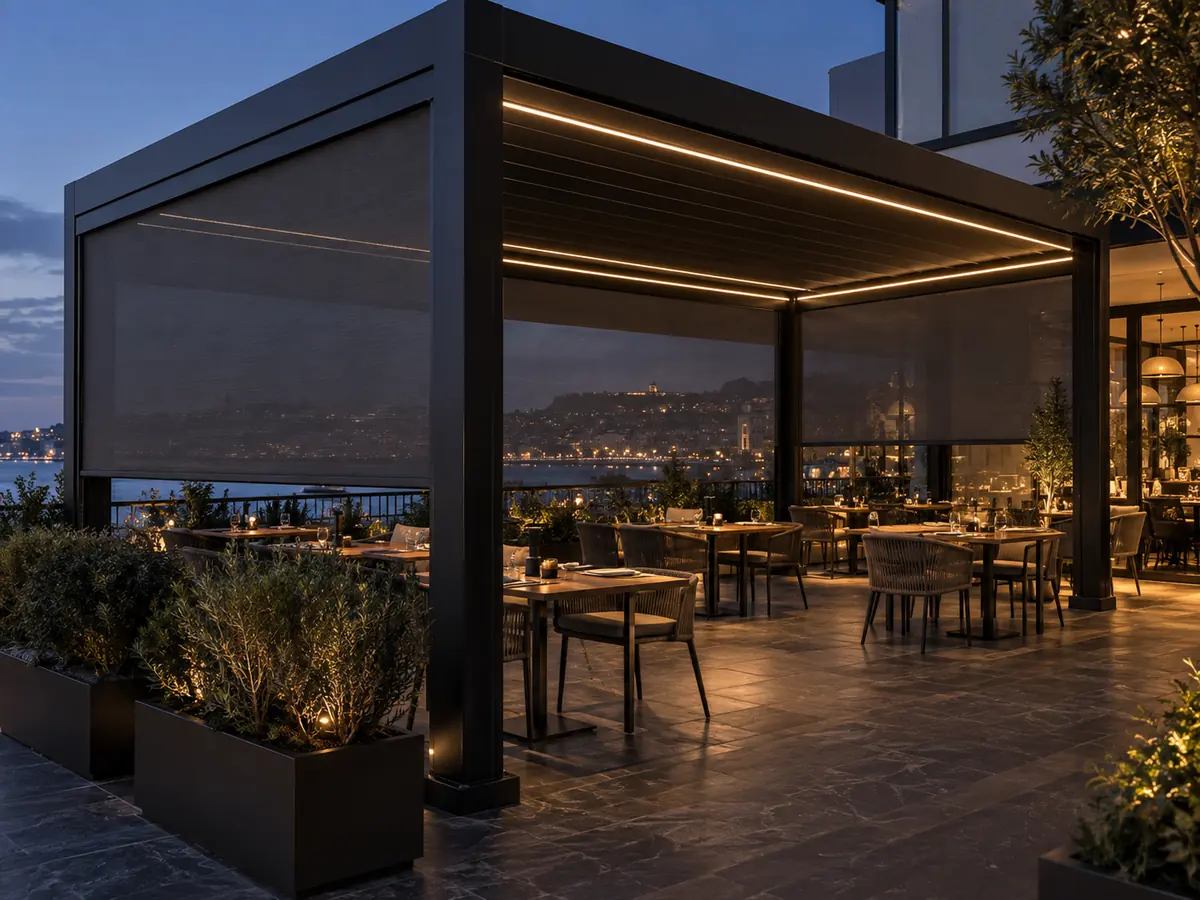
A pergola ZIP screen is a motorized vertical fabric screen whose side edges remain captured in guide channels. Integrated into an aluminum pergola, it can reduce low-angle sun, glare, light wind and visual exposure while retracting when an open edge is preferred.
What ZIP retention changes
A conventional drop blind can move away from its side guides in a breeze. The ZIP edge remains engaged within the channel, helping the fabric stay aligned and creating a cleaner perimeter. The system is still a screen rather than a structural wall, and its wind rating and safe operating conditions depend on dimensions, fabric, guide specification and installation.
When screens are planned with the pergola, the cassette, guide channels, cable routes and controls can be coordinated with the frame. This is visually cleaner and reduces on-site improvisation. Retrofitting may be possible, but available fixing surfaces and clear openings must be checked first.
- Solar glare and low-angle sun control
- Retractable privacy at exposed edges
- Reduced wind and airborne debris within operating limits
- Coordinated motors, wiring and control groups
Fabric, openness and visibility
Screen fabric is selected by balancing outward visibility, shade, privacy and airflow. A more open mesh preserves the view and ventilation but provides less privacy. A denser material reduces glare and visual exposure but can make the space feel more enclosed. Color also affects apparent transparency and heat absorption.
A screen is not insect-proof or weather-tight unless every interface is designed for that purpose, and it should not be described as a substitute for glazing. Rain can enter around edges or be driven through mesh. For conditioned or fully sealed rooms, a building-envelope solution is more appropriate.
| Priority | Selection direction |
|---|---|
| View outward | Higher openness mesh and darker visual tone |
| Privacy | Denser fabric with careful night-light review |
| Solar control | Fabric performance matched to orientation |
| Weather exposure | Confirm dimensions and operating wind limit |
Restaurant, residential and hotel use
Restaurants use screens to control late-afternoon glare, protect seating at exposed edges and create more consistent guest comfort. Each elevation may need separate control because sun and wind arrive from different directions. Staff should be able to retract a screen quickly when conditions exceed its operating range.
At villas and hotels, screens add temporary privacy without permanently blocking the landscape. They are useful beside neighboring properties, pool areas and west-facing terraces. Door locations, emergency routes and daily circulation must remain clear when screens are down.
- West-facing restaurant terraces
- Villa patios close to neighboring properties
- Hotel lounges and poolside cabanas
- Pergolas with LED lighting or glass combinations
Installation and ownership
The frame opening must be square, the cassette supported and both guide channels aligned. Electrical routes and limit settings are completed before final handover. On multi-screen projects, clear labeling prevents accidental operation of the wrong elevation.
Owners should keep guides clean, remove salt and dirt from fabric, avoid operating a wet or frozen screen outside manufacturer instructions, and inspect the bottom bar and guide retention. Damage should be addressed promptly instead of repeatedly cycling the motor.
Screen dimensions should be recorded by elevation, together with fabric reference, motor side and control channel. For trade and hospitality projects, keeping this schedule with the handover documents makes later fabric or component replacement more precise. Staff should also know which weather conditions require screens to be raised rather than relying only on automation.
Common questions
Do ZIP screens make a pergola waterproof?+
No. They improve side protection but are not sealed walls and do not make the outdoor space waterproof.
Can each screen operate separately?+
Yes. Independent or grouped controls can be planned for different elevations.
Can screens be added later?+
Sometimes, provided the frame has suitable dimensions, fixing surfaces and cable routes.
Do screens provide privacy at night?+
Privacy depends on fabric openness and lighting; a bright interior may remain visible from a darker exterior.
Project brief
Before you request a quote
You can enquire about Pergola with Integrated ZIP Screens before every detail is final. The following information helps the team identify a relevant configuration, coordinate interfaces and avoid an incomplete budget comparison.
- Project location and intended application
- Overall dimensions or a marked plan
- Freestanding, wall-connected or other installation type
- Preferred model or required roof movement
- Color or finish direction
- Accessories and control requirements
- Quantity or number of project zones
- Site photos, drawings or reference details
Project configuration review
Discuss your pergola project with LUCY.
Share the intended use, location, dimensions and options for Pergola with Integrated ZIP Screens. LUCY will review the model and project interfaces before preparing a factory quotation.
Request custom size