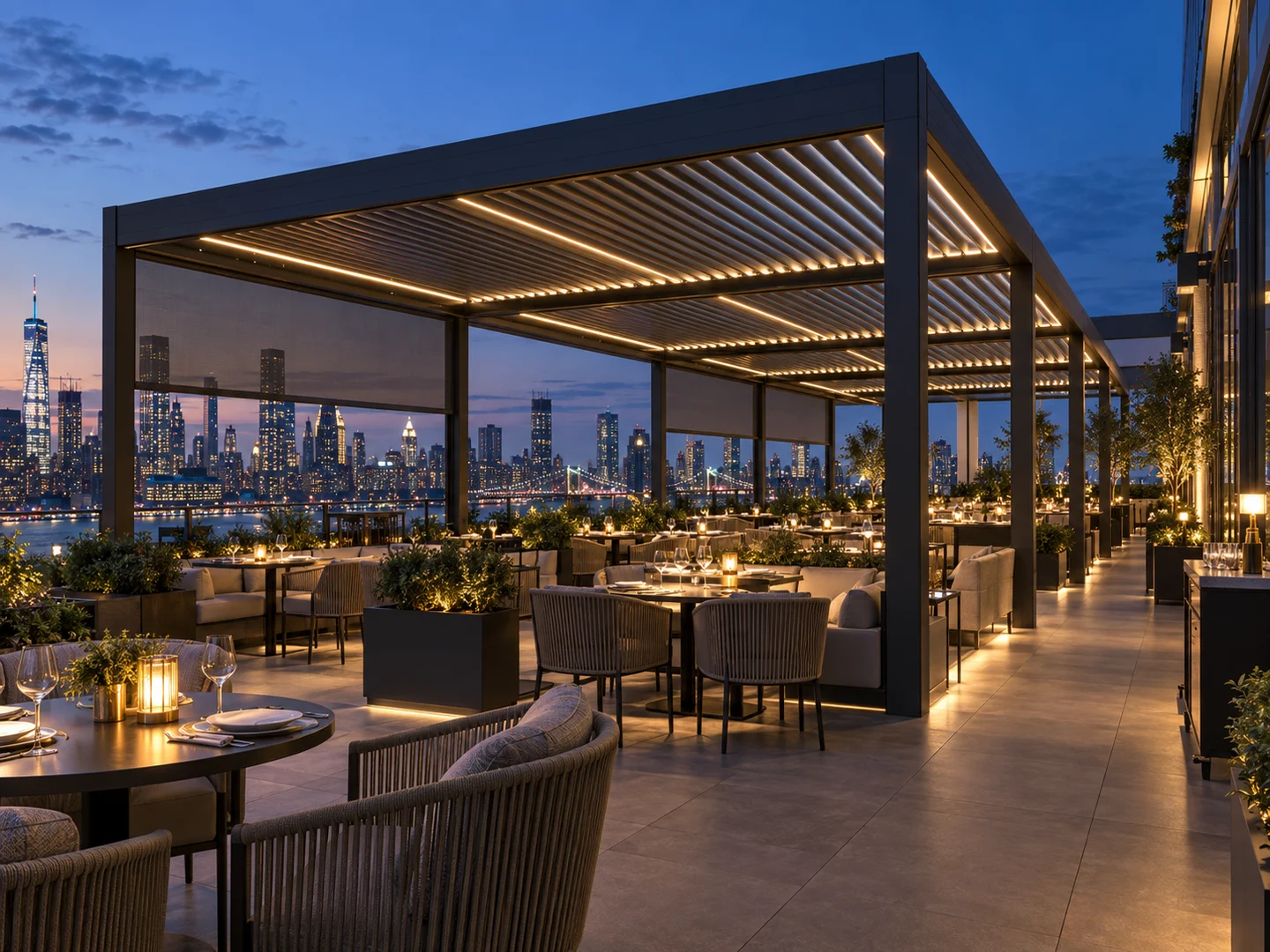
A commercial pergola should be purchased from a coordinated project brief covering use, dimensions, structural criteria, drainage, controls, accessories, installation and delivery. This reduces proposal gaps and helps architects, contractors and operators compare manufacturers on the same basis.
Define performance and operations
Describe who uses the space, operating hours, furniture layout and the weather conditions that interrupt service. Identify whether the priority is daily solar control, rain response, open sky, privacy or architectural identity. The answer guides roof and side-system selection.
Map emergency routes, accessible paths, doors, service zones and cleaning access. Controls should match the operator: several clearly named zones are often better than one large system or many unlabelled remotes.
- Application, occupancy and operating hours
- Roof behavior and weather priorities
- Furniture, circulation and egress
- Control zones and staff procedure
- Maintenance and service access
Coordinate technical scope
Provide design wind and snow criteria, site exposure, foundations or receiving structure, power supply and water discharge plan. Determine which party supplies calculations, anchors, flashing, lifting, wiring and commissioning. Accessories must be included in load and interface coordination.
Drawings should show module grid, overall dimensions, clear heights, post centers, blade or retract direction, outlet posts, screen elevations and control locations. The project team should approve them as a coordinated package rather than separate sales sketches.
| Package | Minimum definition |
|---|---|
| Structure | Modules, posts, finish and design criteria |
| Roof | Movement, motors, safe positions and drainage |
| Sides | Screens/glass sizes, tracks and controls |
| Delivery | Packing, Incoterm, unloading and storage |
| Installation | Foundations, anchors, wiring, testing and handover |
Evaluate lifecycle, not only supply price
Consider cleaning access, replaceable motors, control compatibility, finish exposure and availability of spare parts. A slightly lower initial price can be offset by unclear packing, missing hardware, difficult servicing or unplanned local fabrication.
For multi-site programs, standardize what is genuinely repeatable—finish, controls, labels and documentation—while still reviewing wind, foundations and layout for each location. Keep approved records for future parts and extensions.
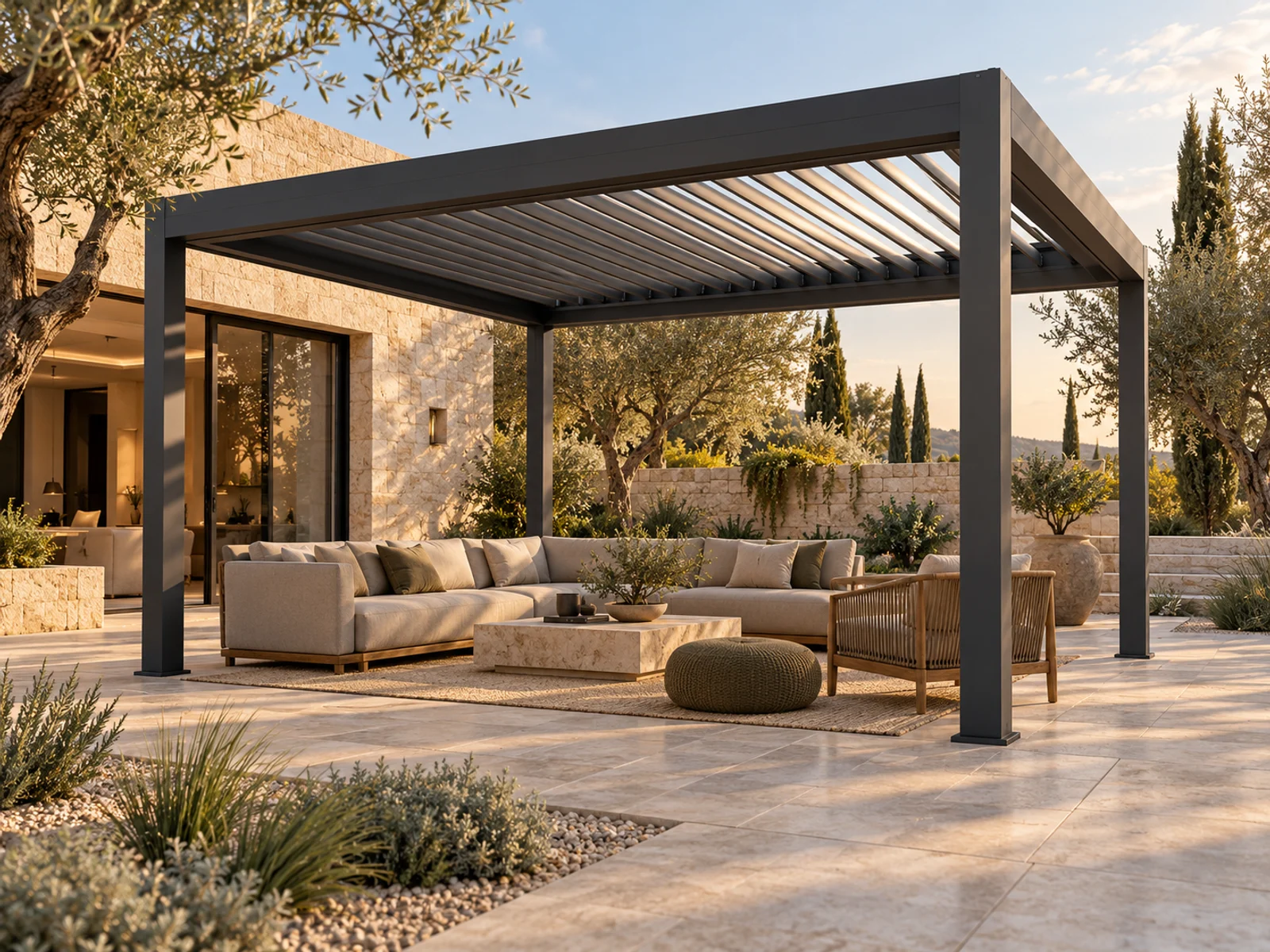
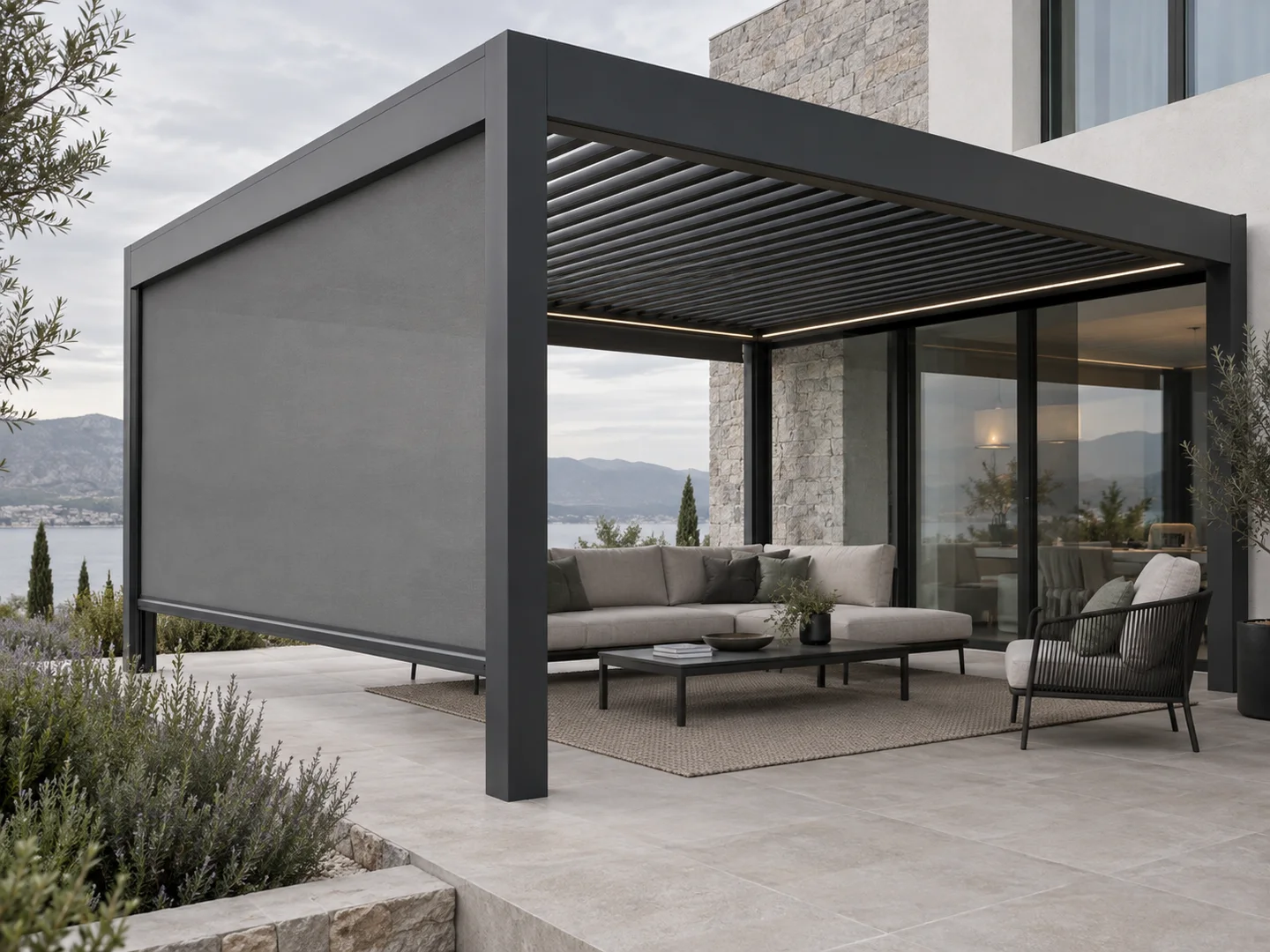
Project visuals
See the details in context
Common questions
When should the pergola supplier join the project?+
Before foundations and electrical routes are fixed, so module and drainage decisions can be coordinated.
Can one design be reused across sites?+
Some components can be standardized, but exposure, anchoring and layout require site review.
What should handover include?+
Operating limits, controls, cleaning, drainage, maintenance and parts documentation.
Should accessories be quoted later?+
Early coordination is safer because screens, glass and lighting affect structure, wiring and interfaces.
About LUCY
Manufacturer-focused guidance from LUCY.
This guide addresses commercial pergola buying guide from the perspective of a configurable aluminum pergola manufacturer. Product selection, OEM / ODM and project coordination remain tied to verified site and technical inputs.
For product information, catalogues or a factory quote, contact LUCY on WeChat: Lu260920
Learn about LUCY manufacturing →Project configuration review
Discuss your pergola project with LUCY.
If this commercial pergola buying guide guide matches your project question, send the location, dimensions and intended use for a project-specific review.
Get a quote